Shanghai, China +86-17317656853 inquiry@cgprotection.com

C&G Fire Fighting Suit

Products Firefighting Suit
<
>

C&G Fire Fighting Suit

View the C&G Catalogue

C&G Fire Fighting Suit Information1. Product OverviewTitle: Fire Fighting SuitSubtitle: HRPro-J/P Fire RescueCore Performance Features Inherently flame resistan


If you need timely service, please contact us through online chat on our website
or Email: inquiry@cgprotection.com
WhatsApp: +8617317656853

C&G Fire Fighting Suit Information

1. Product Overview

Title: Fire Fighting Suit

Subtitle: HRPro-J/P Fire Rescue

Core Performance Features

  • Inherently flame resistant
  • Waterproof & breathable
  • Durable and comfortable to wear
  • Excellent thermal protection performance
  • High hydrostatic pressure resistance
  • Great wet resistance

Certified Standards

  • EN469:2020
  • EN ISO 13688:2013+A1:2021

2. Basic Information Table

表格
Item Details
Brand C&G®
Product Name Fire Fighting Suit
Model HRPro-J/P
Application Field Fire Rescue
Compliance Standards EN469:2020, EN ISO 13688:2013+A1:2021

3. Three Composite Layers Structure

Title: THREE COMPOSITE LAYERS STRUCTURE

  1. Outer LayerHigh-performance flame-resistant outer shell
  2. Middle LayerWaterproof, breathable, and thermally insulated middle layer
  3. Inner LayerSoft comfortable inner lining

Extra Appearance Note

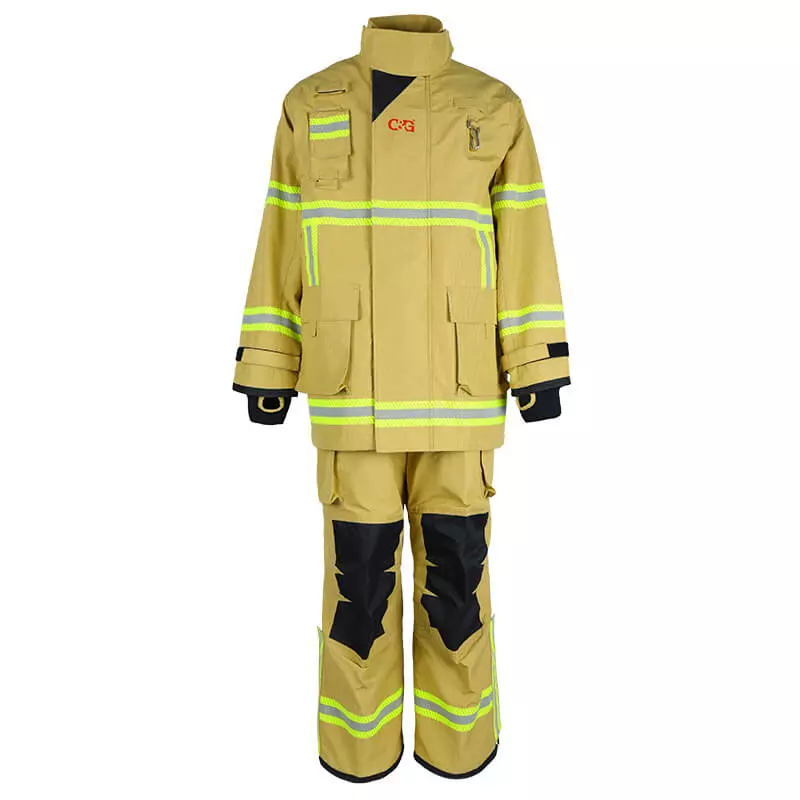
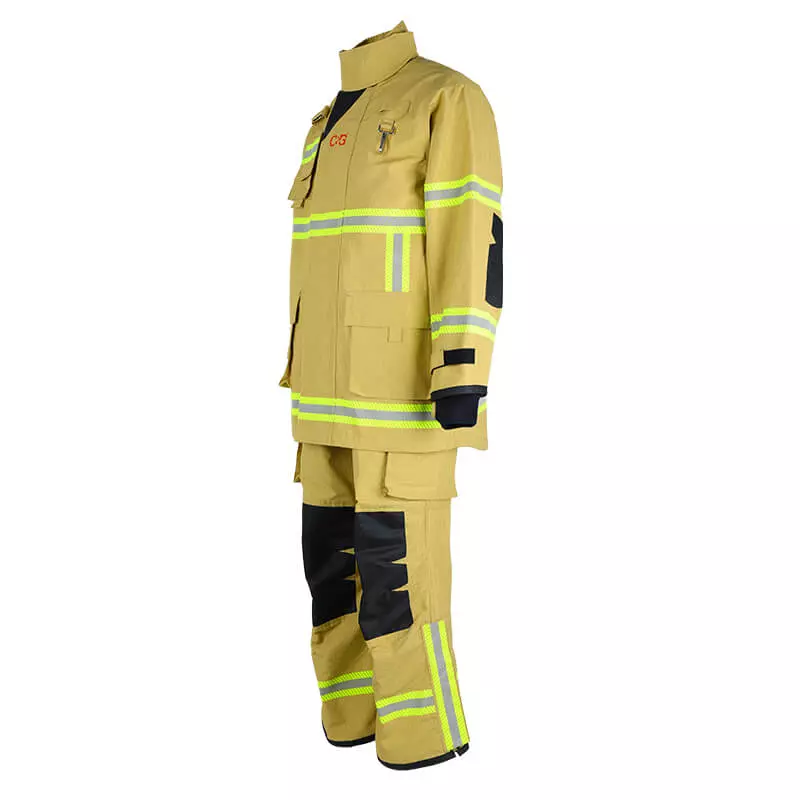
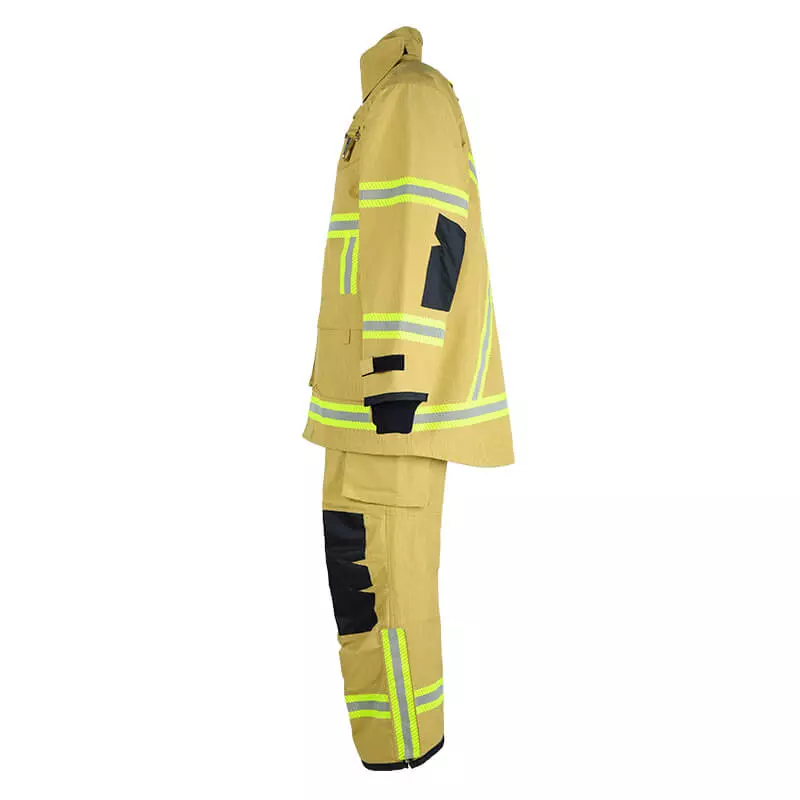
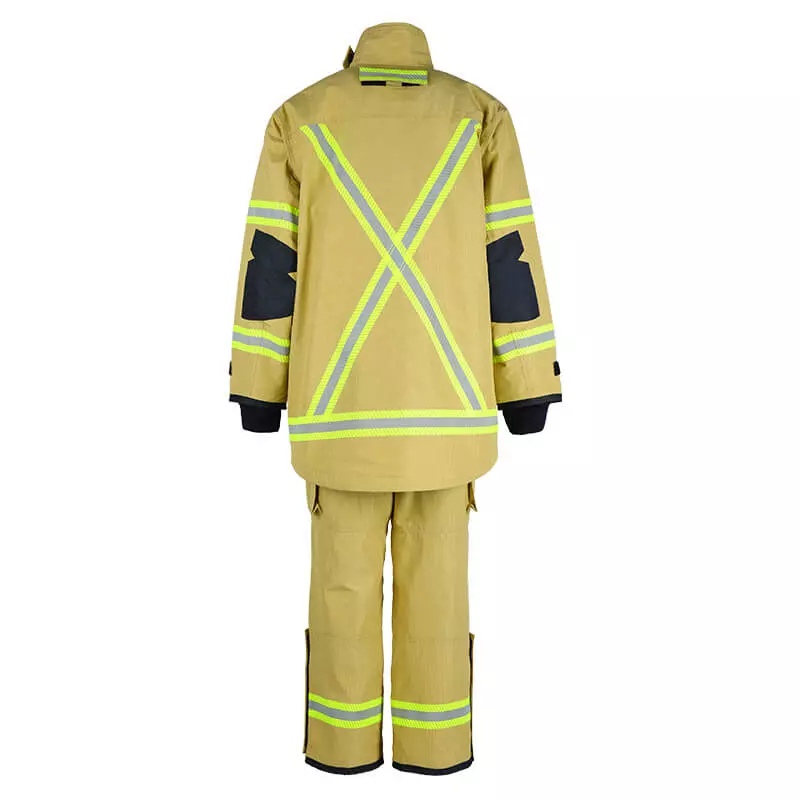
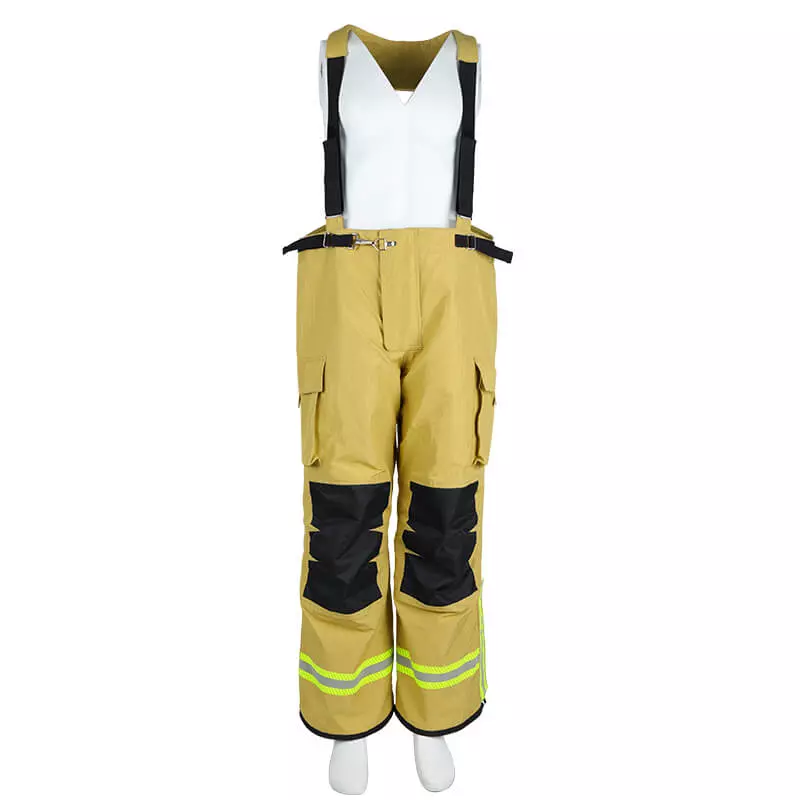
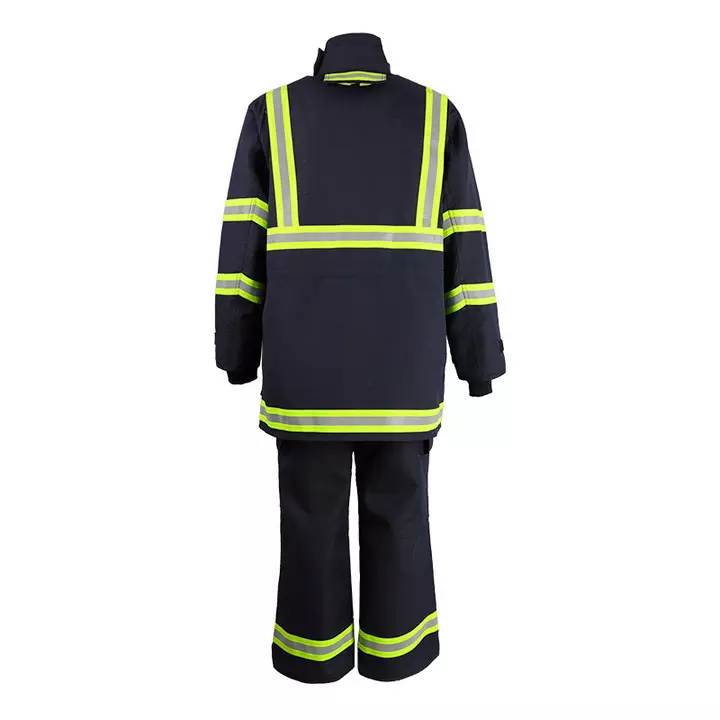
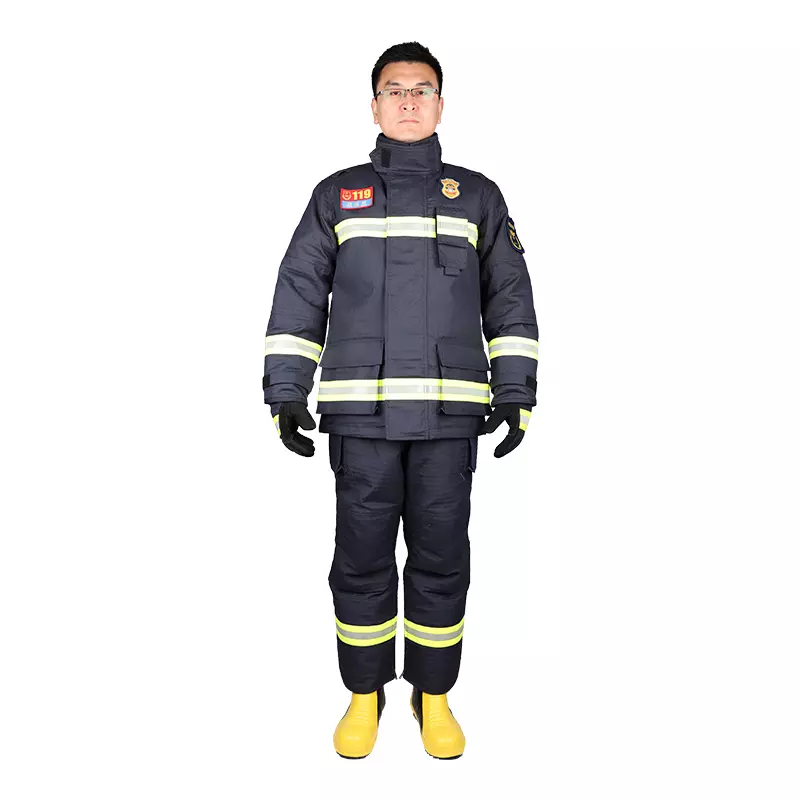
Two-piece split jacket & trousers set, tan main body with black reinforced wear-resistant patches and high-visibility reflective stripes on torso, sleeves and pant legs; reflective X-shaped strips on the back of the jacket for enhanced visibility.

4. Application Description

C&G Fire Fighting Suit adopts premium raw materials and exquisite workmanship. It delivers all-round, professional fire rescue protection for firefighters, serving as a trustworthy partner for emergency rescue operations.

Related Products

Get in Touch

Interested in C&G's Services? Visit our Contact page and let us know!

Contact Now

Clothing used for protection in these scenarios is typically tested according to the BS EN ISO 11612 standard. This standard categorizes fabrics into three performance levels, which align with the aforementioned levels (Level 1, 2, and 3). The tables prov ... Clik for More

The main difference between FR (flame-resistant) and non-FR clothing is their ability to resist flames and thermal hazards. FR clothing is designed to self-extinguish when exposed to flames, preventing or limiting burn injuries. On the other hand, non-FR ... Clik for More

FR safety refers to the use of flame-resistant (FR) clothing and equipment to protect workers from fire and thermal hazards in the workplace. Both European and American standards have specific requirements and standards for FR safety.  ... Clik for More

The purpose of an arc flash study is to identify and evaluate the potential hazards associated with electrical arcs in a workplace, and to develop appropriate safety measures to protect workers from these hazards. The study is typically conducted by a qua ... Clik for More

An arc flash study is a comprehensive analysis of an electrical system to determine the potential hazards associated with electrical arcs and to establish appropriate safety procedures and personal protective equipment (PPE) requirements. ​​​​​​​An arc fl ... Clik for More

Once these factors are determined, the incident energy can be calculated using a variety of methods, including software programs, tables, and equations. The results of the incident energy calculation are then used to determine the appropriate level of PPE ... Clik for More

Incident energy is a measure of the thermal energy released during an arc flash event. It is the amount of energy per unit area that is generated by an electrical arc and is typically measured in calories per square centimeter (cal/cm2) or joules per squa ... Clik for More

Arc flash PPE (Personal Protective Equipment) levels and incident energy are both related to electrical safety in the workplace, but they refer to different asp ... Clik for More

Arc flash boundaries, on the other hand, refer to the distance from an arc flash hazard where a worker may be at risk of receiving a second-degree burn or worse if an arc flash incident were to occur. The arc flash boundary is established based on the pot ... Clik for More

© 2023 Shanghai C&G. All Rights Reserved.