Shanghai, China
+86-17317656853
inquiry@cgprotection.com

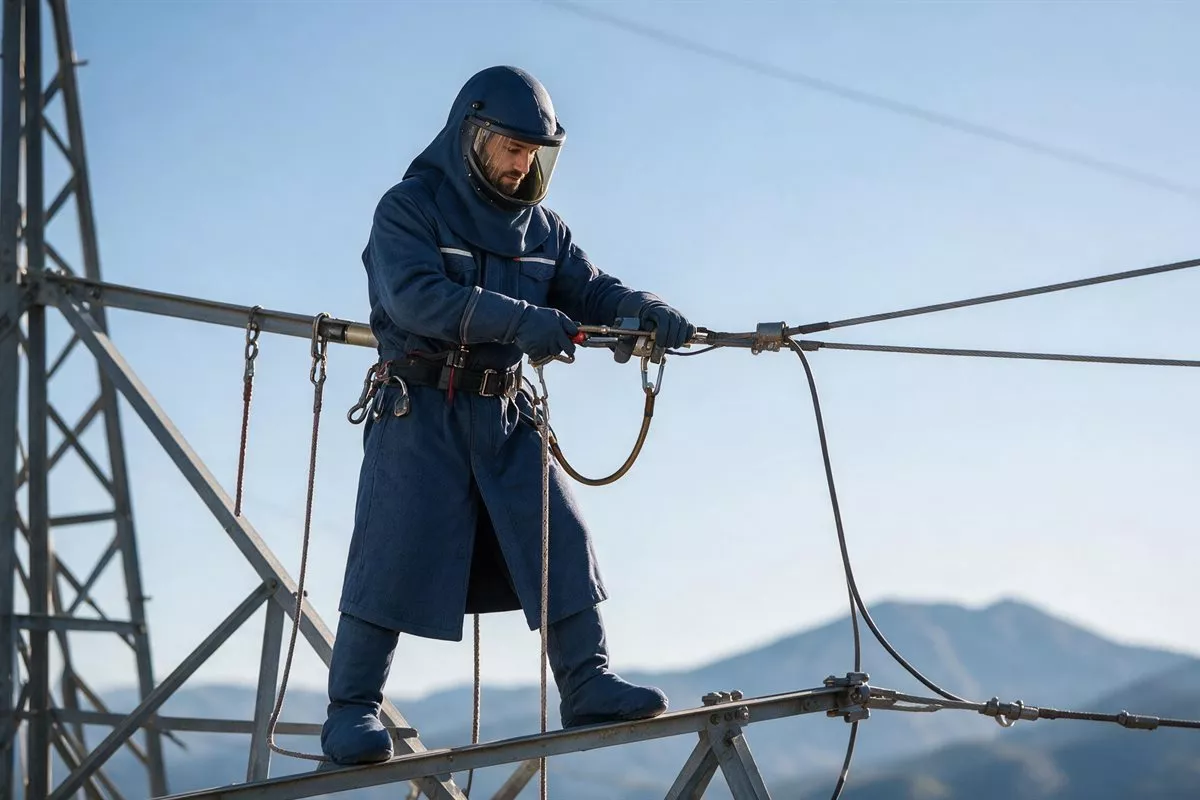
Most arc flash programmes start with a catalogue and end with a compromise: a suit that meets the cal rating but not the size range, a colour that does not match the fleet, or a hood that does not fit over the hard hats already in use. A custom arc flash suit programme exists to remove those compromises before the order is placed, not after the first delivery.
This guide is written for the people who write the purchase specification: safety managers, procurement teams and distributors supplying utilities, contractors and industrial plants. It covers the seven decisions that define a custom programme — arc rating, configuration, fabric, sizing, labelling, documentation, and sampling — and the details that most specifications leave out.
Start from the arc flash study, not from an existing garment. The required arc rating is set by the calculated incident energy at the working distance, and the standard your authority having jurisdiction applies will determine how that number is expressed.
C&G ArcPro® suits are available across the range below, so the specification should state the value rather than a category name alone:
| Typical level | Arc rating | Where it is normally specified |
|---|---|---|
| CAT 1 | 7.5 cal/cm² ATPV | Low-energy tasks, switching and visual inspection outside the arc flash boundary |
| CAT 2 | 8 – 20 cal/cm² ATPV | Distribution work, panel operation, general electrical maintenance |
| CAT 3 | 25 cal/cm² ATPV | Live work and higher-energy distribution tasks |
| CAT 4 | 40 – 67 cal/cm² ATPV | Transmission, substation and high-energy live-line work |
State which standard you are buying to. The fabric test (ASTM F1506-25) and the arc test (ASTM F1959, IEC 61482-1-1) are separate, and a garment standard such as IEC 61482-2 or EN 61482-2 adds construction and marking requirements that a fabric certificate alone does not cover. If you also require flame spread, heat transmission and antistatic behaviour, list those standards on the same line of the specification: EN ISO 11612:2015, EN 1149-5:2018 and, for the Chinese market, DL/T 320-2019 and GB 8965.4-2022.
Two practical notes. First, do not overspecify: buying 40 cal suits for 8 cal tasks adds heat stress, weight and cost with no gain in safety. Second, ask for ATPV and EBT where both exist, and decide which governs your selection — on some fabrics the EBT value controls the usable rating.
The same arc rating can be delivered in several configurations, and the right one depends on how long the wearer is in the suit, what they need to reach, and how quickly they must don it.
| Configuration | Strength | Watch out for |
|---|---|---|
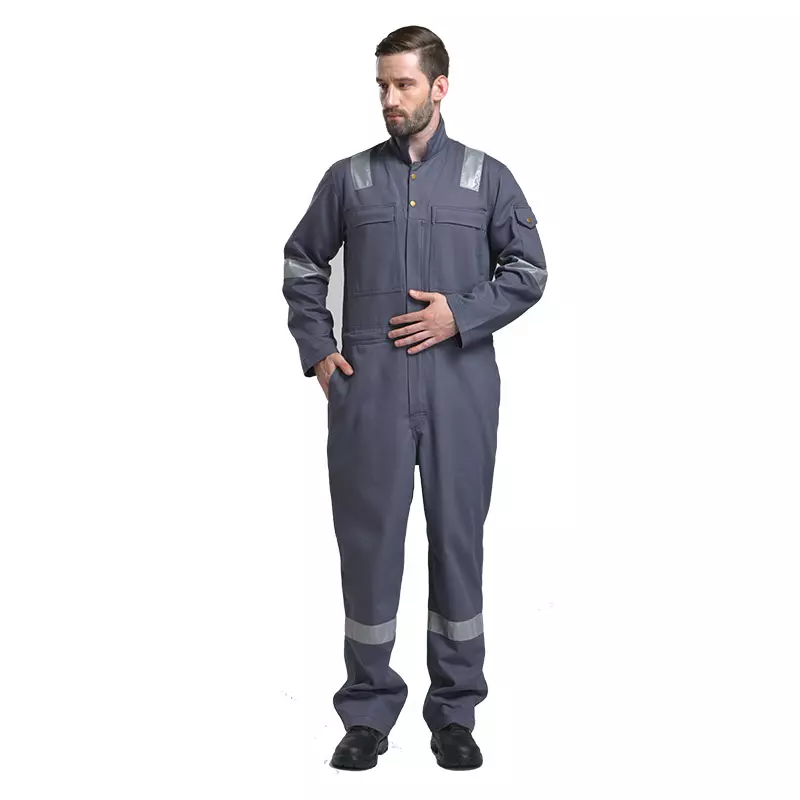
| Coverall (one-piece) | Fewest gaps at the waist, fast to put on, good for confined work | Restricted venting; sizing must allow layering without tightness |
| Jacket and trousers | Flexible, easy to replace one worn component, familiar to crews | Waist gap if the jacket rides up; check overlap length |
| Bib overall and jacket | Better waist coverage for climbing and kneeling work | Bulk at the shoulder; straps must not sit under a hood collar |
| Robe / long coat | Fast donning over base layers for switching and live-line work | Length must not trip or snag; leg coverage still required |
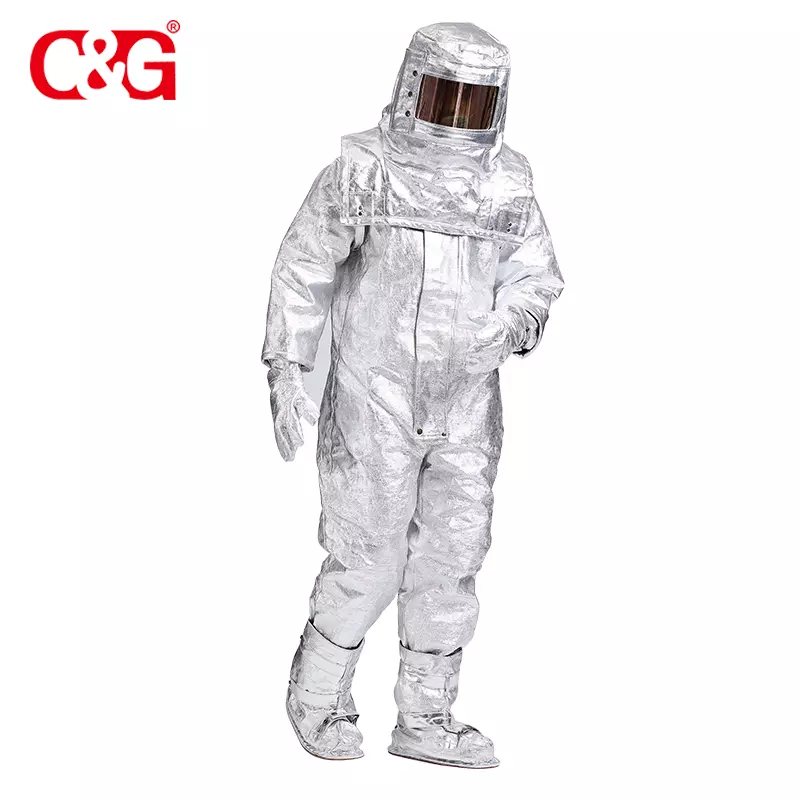
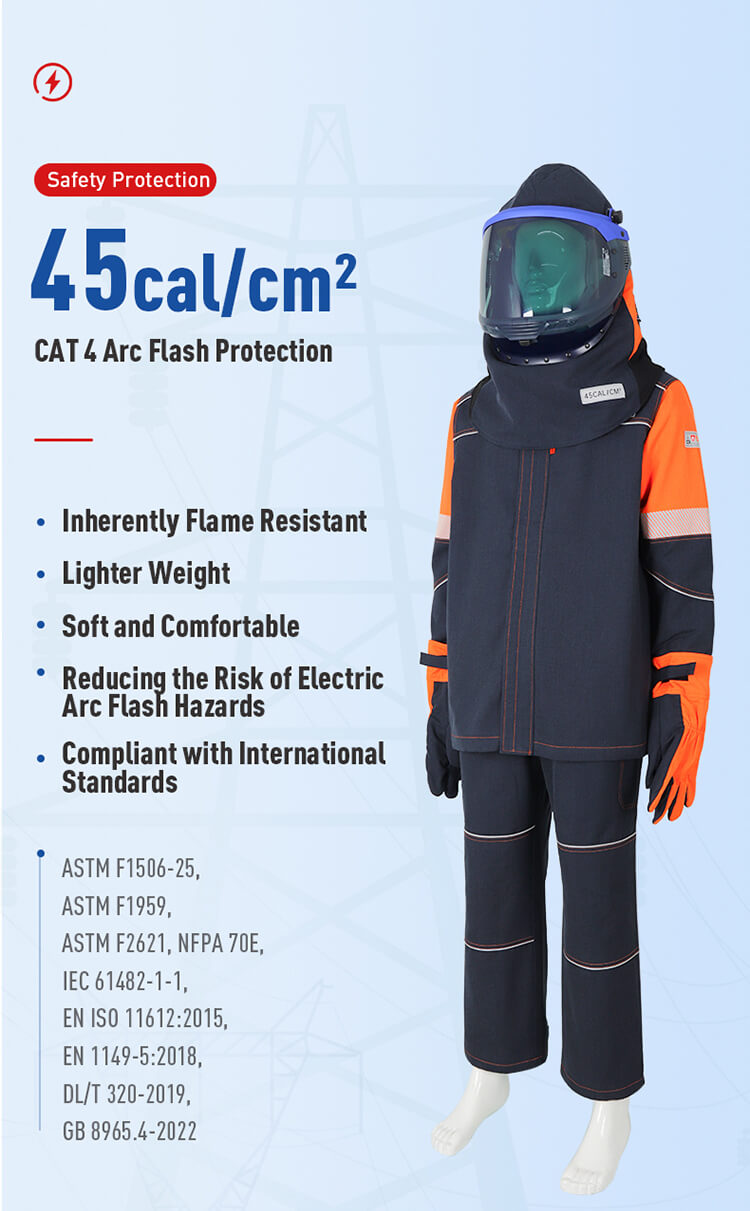
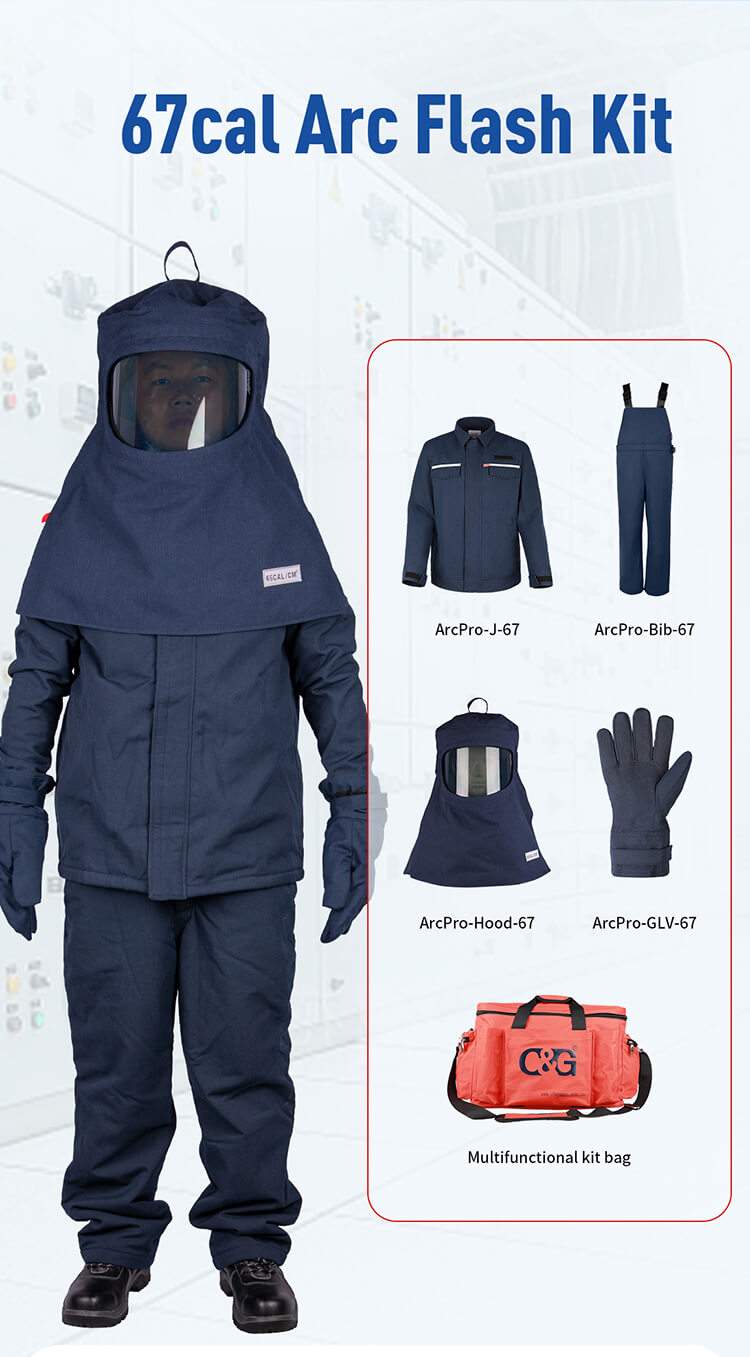
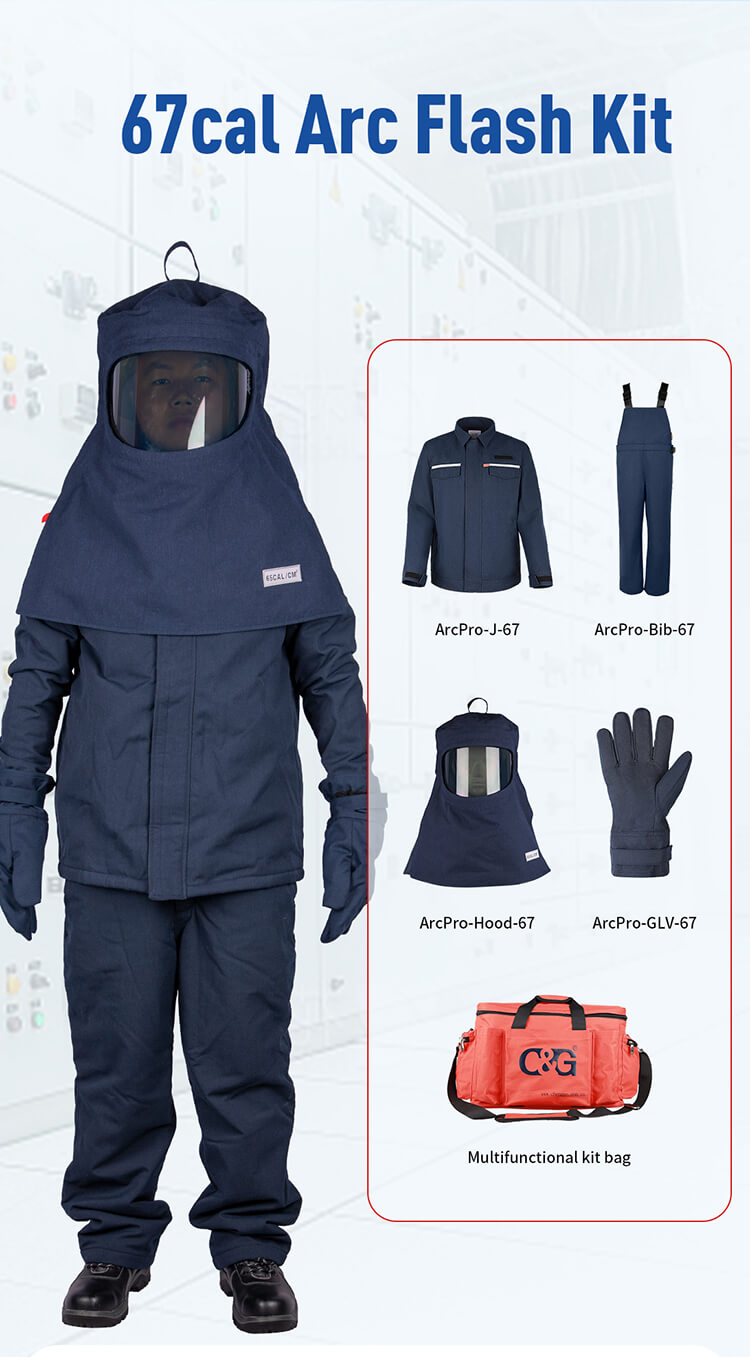
Then specify the accessories as part of the same system: hood type (balaclava, lift-front, or high-transparency grey front-opening), face shield, arc-rated gloves, leggings or boot covers. A suit is only a system when every component is rated for the same task and tested to work together. Bear in mind that a complete kit is easier to audit than individually purchased parts, which is why modular kits such as the 45 cal/cm² CAT 4 arc flash kit are popular for high-energy work.
Two suits with the same arc rating can behave very differently after a year of washing. The specification should name the fabric construction, not only the rating:
Inherent versus treated FR. Aramid-based inherent fabrics keep their flame resistance for the life of the garment; treated cotton relies on a finish that must be maintained exactly as instructed.
Weight and layering. Higher ratings usually mean more layers or heavier fabric. Where the rating can be met by a lighter intrinsic fabric, wearers are more likely to keep the suit on — a real safety outcome, not a comfort preference.
Antistatic performance. If the site handles explosive atmospheres, specify EN 1149-5:2018 and confirm that the conductive yarn survives the laundering regime you intend to use.
Trim and hardware. Reflective tape, thread, zippers, hook-and-loop and press studs must all be suitable for arc-rated use. A non-FR zipper tape or a nylon slider is a small component that can fail at the worst moment.
Colour and colour fastness. Navy and sky blue are standard for good reason; if you need a corporate colour, confirm fastness to washing and light before bulk production.
Custom sizing fails when the buyer sends four sizes and expects them to fit twenty people. Send measurements instead. A practical sheet records chest, waist, hip, inseam, outseam, sleeve, neck and height for every wearer, measured over the layers that will actually be worn, plus head circumference and hand length for hoods and gloves.
Ask the supplier to confirm three things in writing: the size grade they will use, the tolerance they will hold (for example ±2 cm at the chest), and whether they will produce a fitting sample before bulk. If a crew spans more than one body type, expect the supplier to offer tall and short grades rather than a single scaled pattern. Our arc flash suit sizing guide explains how to take the measurements and how much allowance to add for winter layering.
A custom suit is only manageable in service if every garment can be identified. Specify a label that carries the manufacturer, model, size, standard, arc rating, care instructions, production date and a unique garment ID, and decide whether the ID is also printed inside the collar for quick reading.
Logo application deserves its own line in the specification. Embroidery and heat-transfer badges must use arc-rated thread and materials, and must not be placed where they interfere with a closure, a vent or the hood seal. Ask for a sample of the finished logo treatment on the actual fabric; approval on a paper proof tells you nothing about performance.
The paperwork is part of the product. A complete file for an arc-rated programme typically includes:
Fabric test report to ASTM F1506-25 or the equivalent.
Arc test report to ASTM F1959 and/or IEC 61482-1-1 for the garment construction, not only the fabric.
Declaration of conformity to the garment standard you specified.
Care label artwork and the laundering instructions the tests were based on.
Batch or production record that links delivered garments to test reports.
Keep the file with the purchase order. When an auditor or a customer asks how a 45 cal suit was verified, the answer should be a document reference, not a memory.
For a first order, ask for a pre-production sample in the specified fabric and trim, wear-test it with two or three members of the crew, and approve it in writing before bulk. Approve the packing list format at the same time: garments sorted by size and by location save hours at the receiving dock.
On quality, agree the inspection basis rather than the promise. AQL 2.5 on major defects, a measurement audit against the approved size sheet, seam and zipper checks, and verification of labels and logos are the four checks that catch most problems. Ask for photographs of the pre-shipment inspection if you cannot attend.
Lead time is driven by fabric availability, logo application and the size mix. Four to eight weeks is typical for a custom programme in stock colours, with new fabric colours and multi-site deliveries adding time. Get the production calendar with the quotation, and treat any supplier who will not commit to one as a risk rather than a bargain.
Quoting an arc rating without the standard, so the supplier cannot be held to the test method you need.
Ordering by chest size alone, which produces suits that open a gap at the waist or the cuff.
Forgetting that the hood, gloves and leggings must be rated for the same task as the suit.
Approving a logo treatment that has not been tested on the actual fabric.
Buying the cheapest compliant sample, then discovering that the bulk delivery uses a different trim.
Leaving laundering out of the programme, which is where most long-term performance is lost.
It depends on the fabric and the size mix rather than on a single number. Minimums are usually set per colour and per style, so consolidating a site's requirement into one programme is more efficient than ordering styles separately.
Yes, subject to fabric availability and colour-fastness testing. Confirm the colour against a physical swatch rather than a screen, and ask for wash and light fastness data before bulk production.
They must. Custom sizing and branding change the garment, not the test standard, so the construction you receive should be covered by an arc test report and a declaration of conformity.
Yes, and it is often the right answer: 8 cal suits for general maintenance and 40 cal suits for live work in the same delivery, with clear labelling so the two cannot be mixed in the field.
Agree the repair route when you place the order — who repairs, with which materials, and how a repaired garment is re-labelled. For a fleet, a repair and inspection service is usually cheaper than replacing complete suits when one component fails.
If you are preparing a specification, send it to the C&G team and we will review the arc rating, configuration and sizing sheet before quotation. The ArcPro® arc flash protective clothing range covers 7.5 to 67 cal/cm² in jackets, trousers, bib overalls, coveralls, robes, hoods, gloves and leggings, and the C&G catalogue includes the model references and test standards for each series.
Shanghai C&G's personal protective clothing and PPE products are trusted by customers in the world. Our products are exported worldwide, with a strong presence in the United States, China, Japan, Germany, the United Kingdom, India, France, Italy, Brazil, and Canada. In addition, we have a significant customer base in other countries across each continent, including Australia, New Zealand, South Africa, Nigeria, and Egypt in Africa; Argentina, Chile, and Mexico in South America; Russia, South Korea, and Indonesia in Asia; Spain, Poland, and Turkey in Europe; and Saudi Arabia and the United Arab Emirates in the Middle East. Wherever you are in the world, we have the products you need to stay safe and protected. Contact us today to learn more about our products and how we can help you meet your safety needs.








Shanghai C&G is committed to building a leading brand in the safety emergency industry with technological innovation as the core and sustainable development, providing customers with one-stop safety emergency solutions, escorting the safety of customers, and make the world safer!
Building 39, Lane 123, Shenmei Road, Pudong New District, Shanghai, China
inquiry@cgprotection.com
+86-21-38214394


© 2023 Shanghai C&G. All Rights Reserved.