Shanghai, China
+86-17317656853
inquiry@cgprotection.com

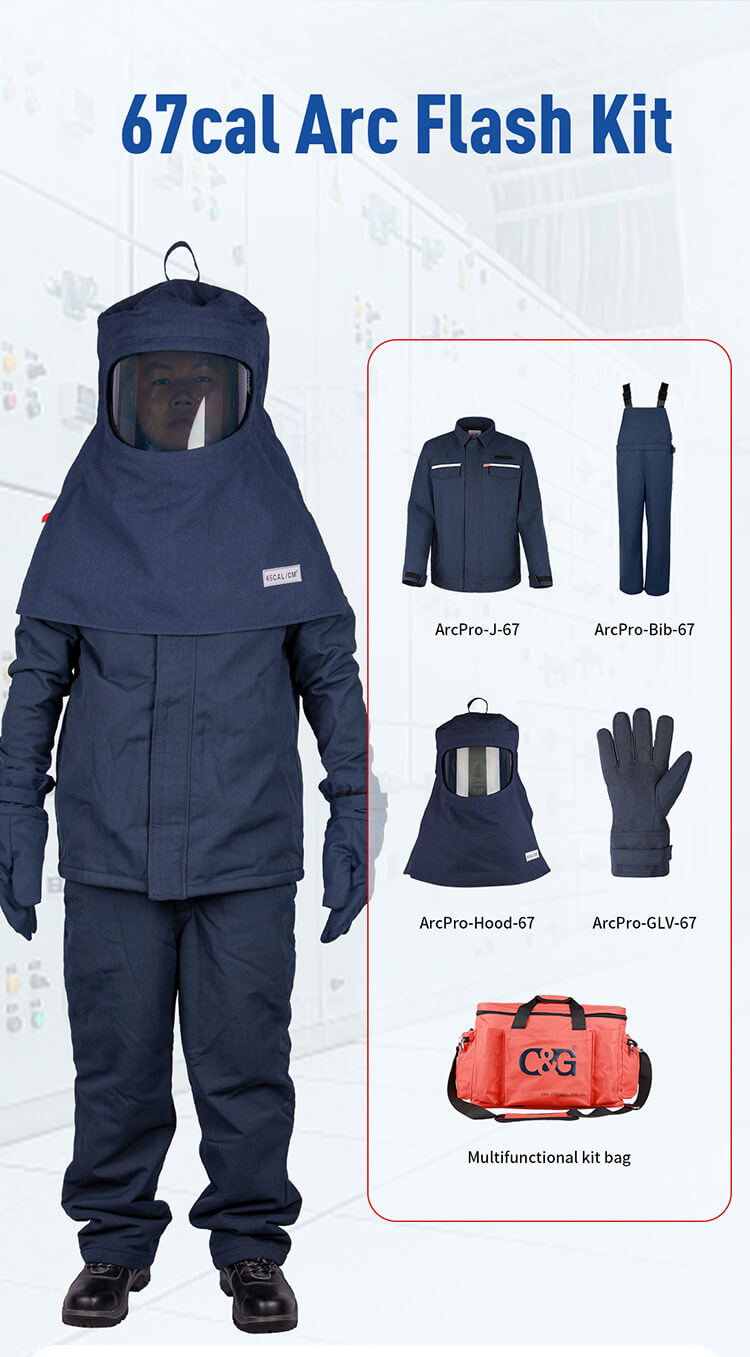
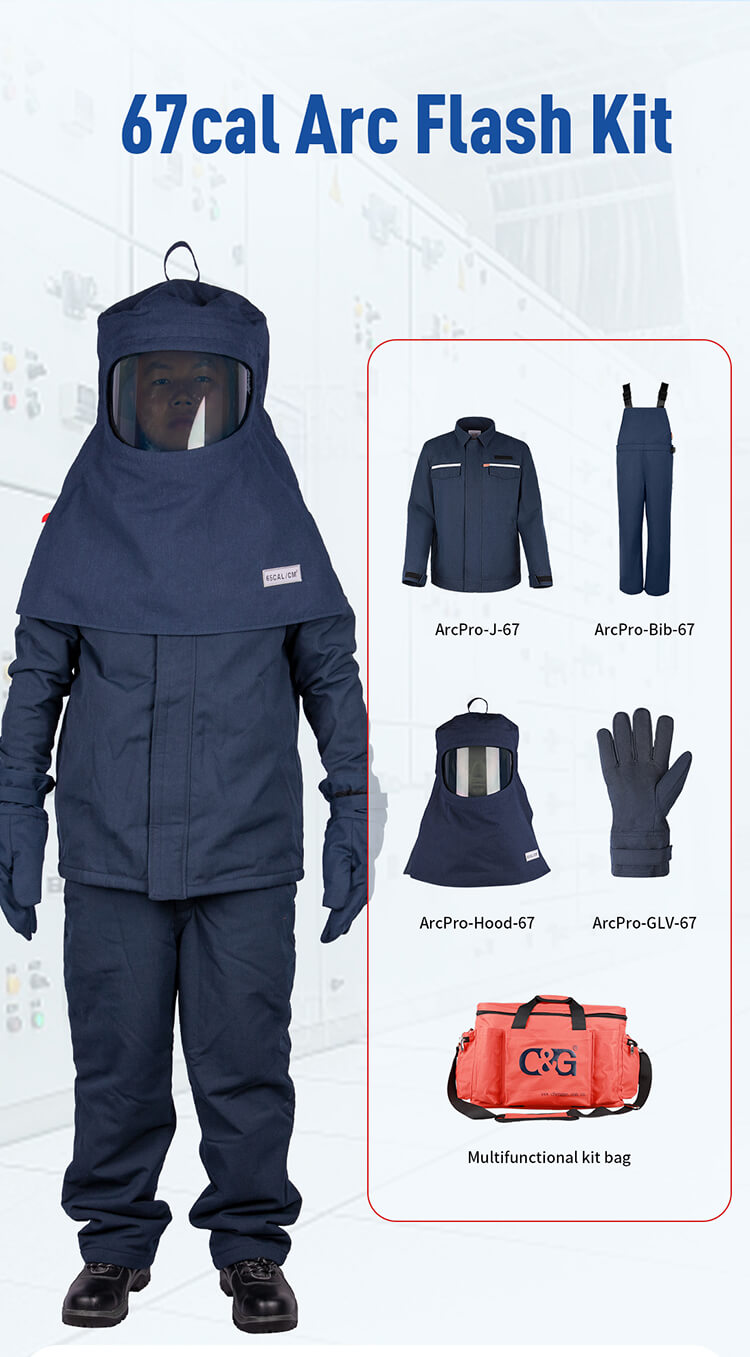
When selecting an Arc Flash Suit, electrical safety professionals need to look beyond the garment's appearance. Fabric technology, arc rating, durability, comfort and maintenance requirements all contribute to the suitability of protective clothing for professional electrical work.
Arc-rated clothing must be designed to address the thermal hazards associated with an electric arc. At the same time, it needs to withstand the demands of regular industrial use, including movement, repeated laundering and daily handling.
C&G Group's ArcPro® Arc Flash Protective Clothing range combines inherently flame-resistant fabric technology with multiple protection levels and garment configurations for electrical and industrial applications.
The fabric is one of the most important components of an Arc Flash Suit. Its properties influence the garment's protective performance, durability, weight and overall wearability.
For professional electrical workers, three considerations are particularly important:
Arc-rated performance: The garment must have a documented arc rating appropriate for the assessed hazard.
Durability: Fabric and garment construction need to withstand the expected conditions of use and care.
Wearer comfort: Weight, flexibility and garment design can affect mobility during maintenance and inspection tasks.
These factors should be evaluated together rather than treating fabric selection as an isolated purchasing decision.
Inherently flame-resistant fabric is engineered so that its flame-resistant properties are built into the fiber or material itself, rather than relying solely on a surface-applied flame-resistant treatment.
C&G ArcPro® uses inherently flame-resistant fabric for its Arc Flash Suit range. According to the product catalog, the protective properties are not simply washed out or worn away through normal laundering and use.
This material approach supports the development of reusable protective garments for demanding electrical work environments.
However, inherent flame resistance and arc rating are not interchangeable concepts. The specific arc protection of a garment must still be verified through the relevant product testing and technical documentation.
The C&G ArcPro® product family includes Arc Flash Suits with different ATPV ratings, allowing users to consider different protection requirements.
The catalog lists ArcPro® configurations including 6, 8, 25, 33, 45, 55 and 67 cal/cm².
Depending on the model, the range includes:
Arc Flash Jackets
Arc Flash Pants
Arc Flash Shirts
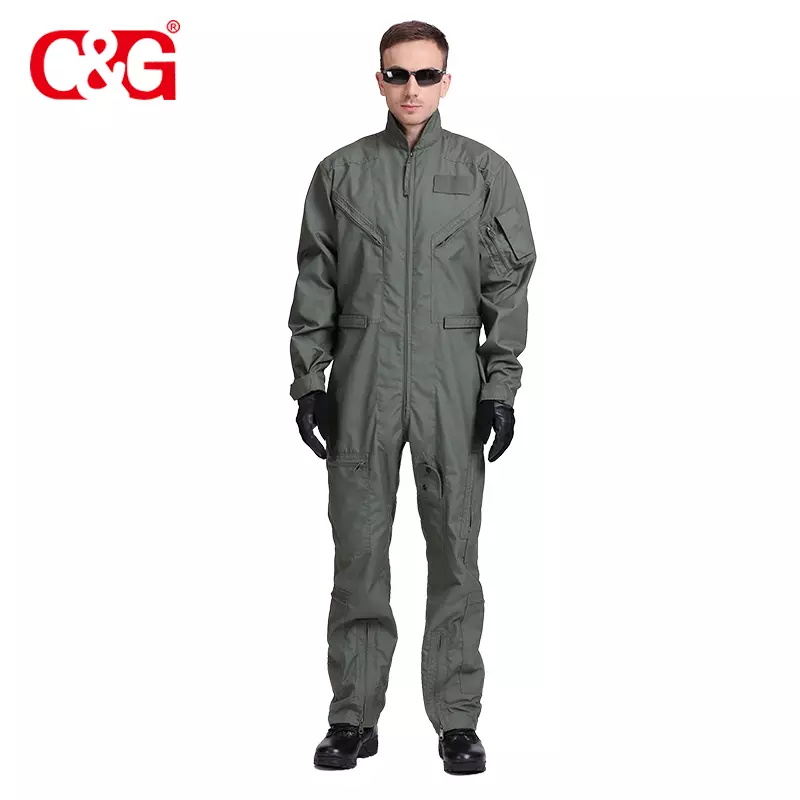
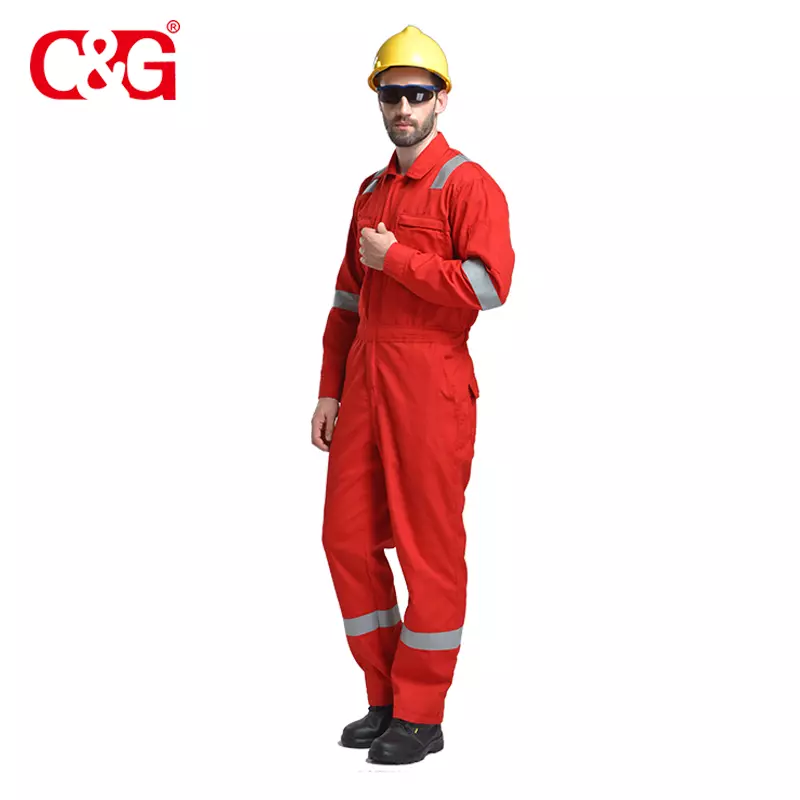
Arc Flash Coveralls
Arc Flash Bib-Overalls
Arc Flash Robes
Arc Flash Hoods
Arc Flash Gloves
This range enables C&G to provide more than a single garment style, supporting different approaches to body coverage and PPE configuration.
Industrial protective clothing may be washed frequently throughout its service life. For procurement teams, durability after laundering is therefore an important consideration.
C&G's product catalog highlights ArcPro® fabric's tear resistance before and after repeated washing. It reports that ArcPro® provides better tear resistance than FR cotton-nylon blends in comparisons involving new fabric and fabric tested after 100 washes.
This information highlights the importance of evaluating both initial fabric properties and performance after repeated care cycles.
Actual garment service life will still depend on factors such as laundering procedures, work conditions, inspection results and the manufacturer's care instructions.
Electrical maintenance may involve walking, reaching, bending and working around complex equipment. Protective clothing that restricts movement can make these tasks more difficult.
The C&G catalog describes ArcPro® multilayer configurations as lighter than comparable FR cotton-nylon blend garments in the specified product range.
A well-designed Arc Flash Suit should balance protection with practical features such as:
Appropriate garment sizing
Functional pocket placement
Ease of movement
Suitable body coverage
Compatibility with other PPE
Manageable weight for the intended task
Comfort does not replace protection requirements, but it is an important factor in whether workers can use PPE correctly throughout a work shift.
When evaluating Arc Flash Protective Clothing, buyers should review the complete technical specification instead of relying on fabric descriptions alone.
Determine the required arc rating through the applicable electrical hazard assessment. Do not select a suit based only on its fabric type or appearance.
Confirm whether the application requires a jacket and pants, coverall, bib-overall or a more comprehensive protective system.
Check the standards and test documentation listed for the exact model. C&G ArcPro® product documentation references standards including ASTM F1959, ASTM F2621, NFPA 70E and IEC 61482-1-1 for relevant products.
The applicable standards vary by product, so they should not automatically be assumed to apply to every garment in the range.
Follow the manufacturer's care instructions and establish a suitable inspection process. Garments that show damage, contamination or other conditions affecting their integrity should be evaluated before further use.
The clothing should be compatible with the required hood, face protection, gloves, helmet and other protective equipment.
Fabric performance is only one part of an effective Arc Flash Protection solution.
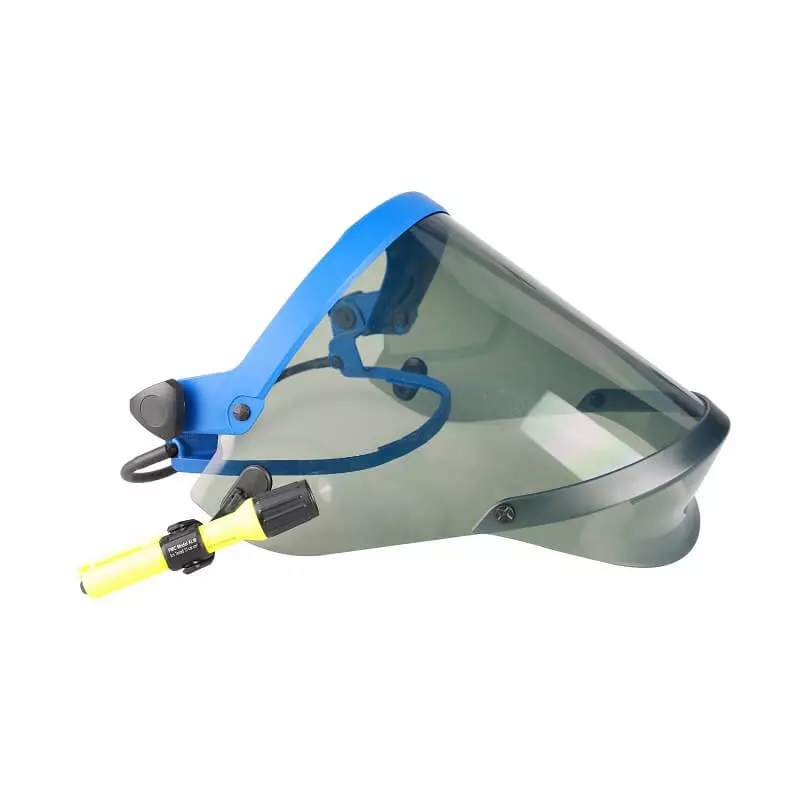
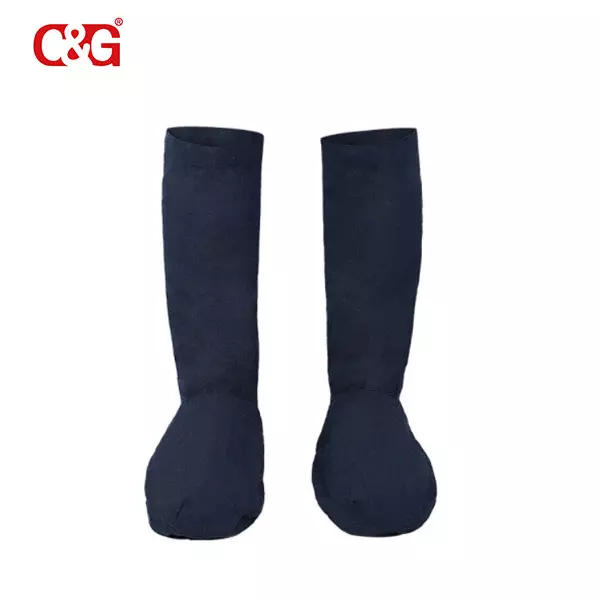
C&G's ArcPro® range also includes supporting PPE components such as arc-rated hoods, lift-front hoods, face shields, gloves and leggings.
For example, the ArcPro-Shield-14 is listed as a 14 cal/cm² arc flash face shield. Its grey shield is designed to support field of view and color recognition, while a transparent chin protector provides downward vision.
The appropriate face and head protection must be selected according to the specific hazard assessment and compatibility requirements.
Founded in Shanghai in 2005, C&G Group develops and supplies personal protective equipment for industries including power and energy, emergency response, firefighting and petrochemical operations.
The company reports having an R&D center and independent laboratory in Shanghai, along with a product portfolio covering multiple high-risk applications.
Through ArcPro®, C&G combines inherently flame-resistant material technology with a broad selection of Arc Flash Protective Clothing and supporting PPE.
A high-quality Arc Flash Suit depends on more than a single material characteristic. Arc rating, inherent flame resistance, durability, garment design, laundering requirements and compatibility with other PPE all matter.
C&G ArcPro® provides a range of arc-rated garments designed for professional electrical safety applications, with product configurations extending from individual jackets and pants to coveralls, bib-overalls, hoods and gloves.
For electrical utilities, industrial maintenance teams and PPE distributors, understanding the fabric and technical specifications behind an Arc Flash Suit is an important step toward building a suitable, durable and well-coordinated protection program.
Tags:
Shanghai C&G's personal protective clothing and PPE products are trusted by customers in the world. Our products are exported worldwide, with a strong presence in the United States, China, Japan, Germany, the United Kingdom, India, France, Italy, Brazil, and Canada. In addition, we have a significant customer base in other countries across each continent, including Australia, New Zealand, South Africa, Nigeria, and Egypt in Africa; Argentina, Chile, and Mexico in South America; Russia, South Korea, and Indonesia in Asia; Spain, Poland, and Turkey in Europe; and Saudi Arabia and the United Arab Emirates in the Middle East. Wherever you are in the world, we have the products you need to stay safe and protected. Contact us today to learn more about our products and how we can help you meet your safety needs.









Shanghai C&G is committed to building a leading brand in the safety emergency industry with technological innovation as the core and sustainable development, providing customers with one-stop safety emergency solutions, escorting the safety of customers, and make the world safer!
Building 39, Lane 123, Shenmei Road, Pudong New District, Shanghai, China
inquiry@cgprotection.com
+86-21-38214394


© 2023 Shanghai C&G. All Rights Reserved.