Shanghai, China
+86-17317656853
inquiry@cgprotection.com

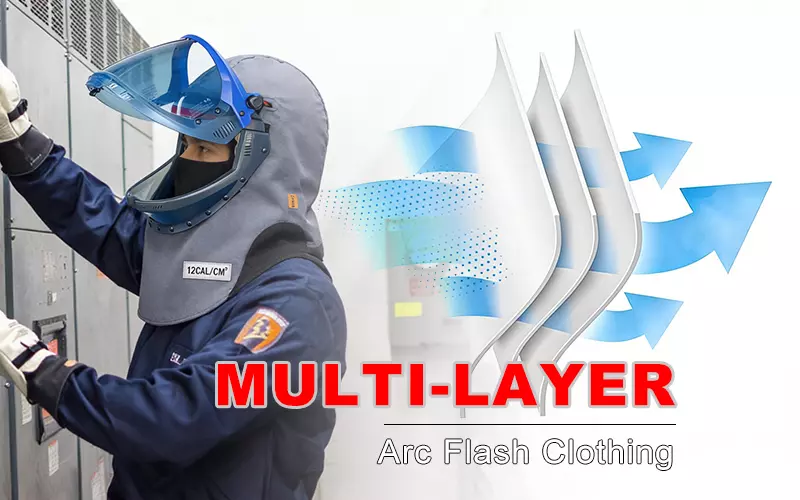
In high-energy electrical environments, protection is not achieved by a single material layer, but by a system of engineered layers working together. A modern arc flash suit is designed as a multi-layer structure to manage extreme thermal energy, delay heat transfer, and maintain garment integrity under arc exposure.
The core objective is not to block energy entirely, but to attenuate thermal energy over time, reducing burn severity and improving wearer survivability.
An arc flash event releases:
Intense radiant and convective heat
Explosive pressure waves
Molten metal particles
This energy is delivered within milliseconds. A single-layer fabric, no matter how advanced, has limited capacity to manage such concentrated energy.
A multi-layer arc flash suit distributes and dissipates this energy across several barriers, significantly improving overall protection performance.
Thermal attenuation refers to the progressive reduction of heat energy as it passes through multiple material layers.
Instead of allowing heat to transfer directly to the skin, each layer:
Absorbs part of the energy
Reflects a portion of radiant heat
Slows down heat conduction
By the time heat reaches the inner layer, its intensity is significantly reduced.
A typical arc flash suit system may include:
Directly exposed to arc energy
Resists ignition and prevents melting
Reflects part of radiant heat
This layer absorbs the initial thermal shock and begins the attenuation process.
Acts as the primary thermal barrier
Traps air for insulation
Absorbs and disperses heat
In multi-layer systems, additional layers further slow heat transfer, increasing protection time.
Minimizes residual heat transfer
Provides moisture management
Prevents direct heat contact with skin
By the time heat reaches this layer, it has been significantly reduced.
Between layers, air gaps play a critical role in thermal protection.
Air has low thermal conductivity, meaning it slows down heat transfer effectively.
A properly designed arc flash suit maintains:
Stable spacing between layers
Controlled garment fit (not overly tight)
If layers are compressed, insulation performance decreases. Therefore, fit and layering integrity are essential to safety.
Arc flash protection is fundamentally about time delay.
Multi-layer systems extend the time required for heat to reach the skin by:
Increasing thermal mass
Creating multiple resistance barriers
Reducing heat transfer speed
This delay allows:
Lower burn severity
Increased escape time
Improved survival outcomes
In arc flash incidents, milliseconds matter.
Thermal protection alone is insufficient if the garment fails structurally.
A multi-layer arc flash suit also enhances:
Reduces risk of fabric rupture under high energy
Maintains coverage during arc exposure
Outer layers deflect and shed molten particles
Inner layers prevent penetration
Multiple layers help dissipate mechanical force
Reduce localized stress on fabric
Maintaining garment integrity ensures continuous protection during the entire event.
Multi-layer arc flash clothing improves overall wearing safety by:
Prevents fabric melting or sticking to skin
Minimizes burn depth
Reduces variability in performance
Provides more predictable protection levels
Multi-layer suits are designed to integrate with:
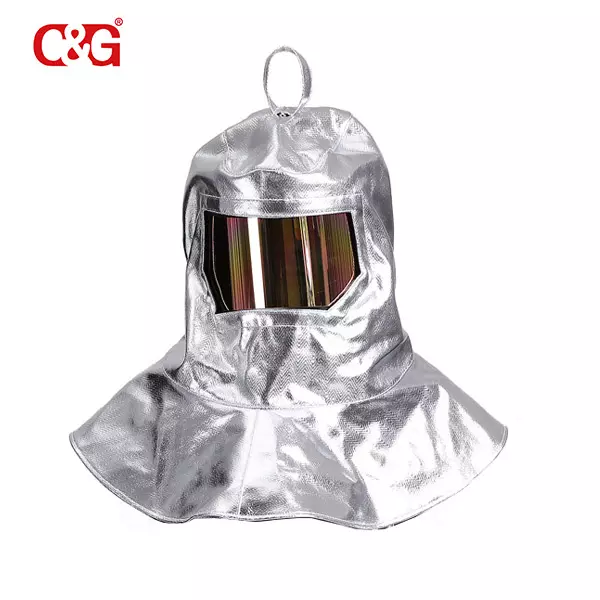
Arc-rated hoods
Gloves
Face shields
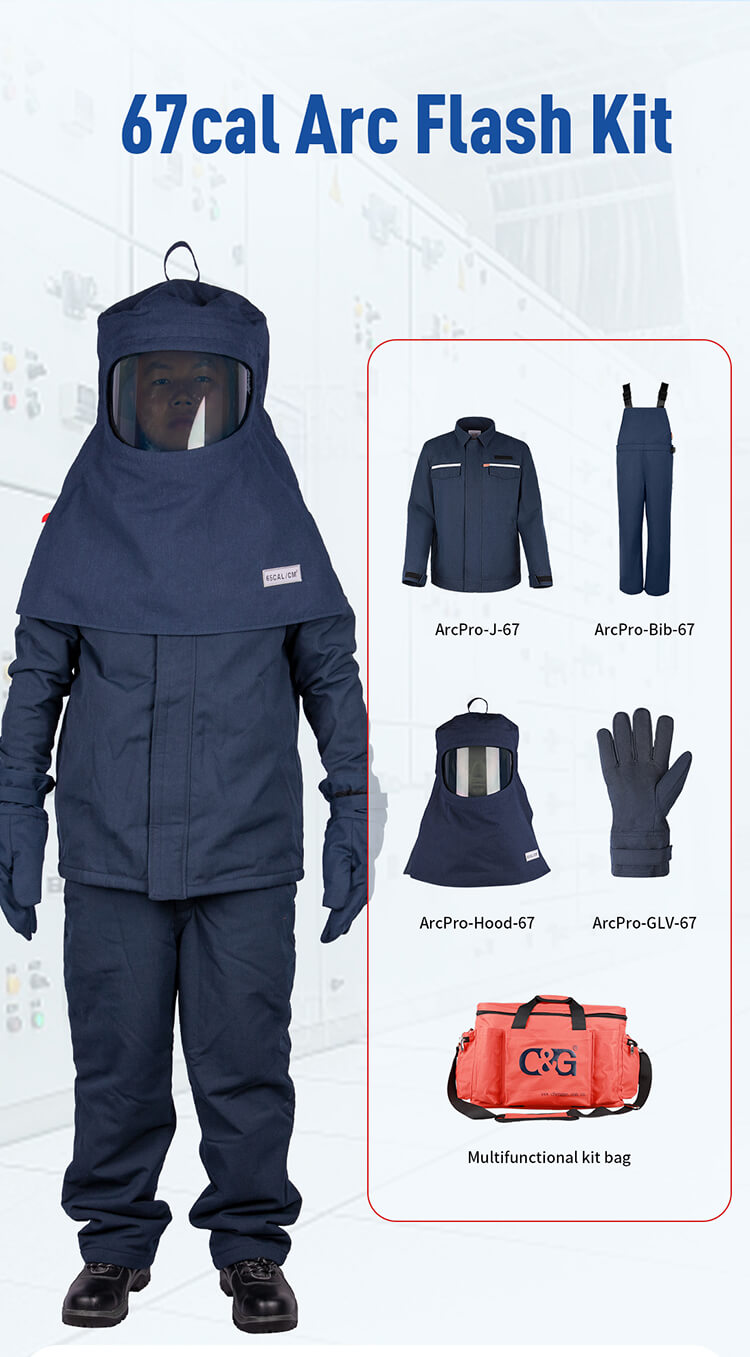
Creating a complete arc flash protection system.
While multi-layer systems improve protection, they also introduce challenges:
Increased weight
Reduced breathability
Potential mobility restrictions
Modern arc flash suit design addresses this by:
Using lightweight high-performance fibers
Optimizing layer count and density
Improving ventilation where possible
The goal is to achieve maximum protection with acceptable wearability, ensuring workers will consistently use the equipment correctly.
A multi-layer arc flash suit enhances protection not by resisting energy outright, but by managing and reducing it progressively.
Its core advantages include:
Layered thermal attenuation
Air-gap insulation
Extended heat transfer time
Improved structural stability under arc exposure
In high-risk electrical environments,
safety is not determined by a single material,
but by how effectively the entire system performs.
Because during an arc flash event,
the difference between severe injury and survivability
often comes down to how well that system can
slow down energy—just long enough.
Tags:

Shanghai C&G's personal protective clothing and PPE products are trusted by customers in the world. Our products are exported worldwide, with a strong presence in the United States, China, Japan, Germany, the United Kingdom, India, France, Italy, Brazil, and Canada. In addition, we have a significant customer base in other countries across each continent, including Australia, New Zealand, South Africa, Nigeria, and Egypt in Africa; Argentina, Chile, and Mexico in South America; Russia, South Korea, and Indonesia in Asia; Spain, Poland, and Turkey in Europe; and Saudi Arabia and the United Arab Emirates in the Middle East. Wherever you are in the world, we have the products you need to stay safe and protected. Contact us today to learn more about our products and how we can help you meet your safety needs.











Shanghai C&G is committed to building a leading brand in the safety emergency industry with technological innovation as the core and sustainable development, providing customers with one-stop safety emergency solutions, escorting the safety of customers, and make the world safer!
Building 39, Lane 123, Shenmei Road, Pudong New District, Shanghai, China
inquiry@cgprotection.com
+86-21-38214394


© 2023 Shanghai C&G. All Rights Reserved.