Shanghai, China
+86-17317656853
inquiry@cgprotection.com

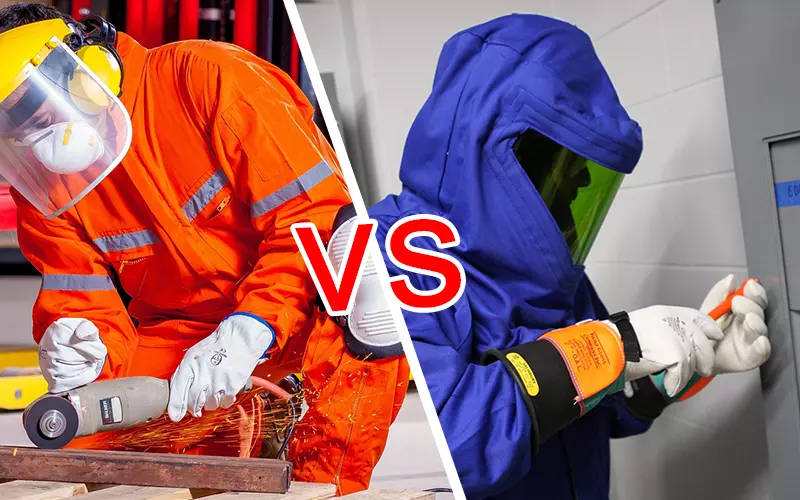
In high-risk industrial environments, selecting the correct protective material is not a matter of preference—it is a matter of safety engineering. Flame-resistant (FR) fabrics and arc flash fabrics (used in an arc flash suit) are often confused, yet they are designed for fundamentally different hazard profiles.
Understanding their differences is critical for ensuring that protective clothing matches the actual risk exposure.
Flame-resistant fabrics are engineered to resist ignition, prevent flame spread, and self-extinguish once the ignition source is removed. Their primary function is to protect against open flames and sustained heat exposure.
These fabrics are commonly made from:
Aramid fibers (e.g., Nomex®)
PBI (Polybenzimidazole)
FR-treated cotton or polyester blends
FR fabrics work through several mechanisms:
When exposed to flame, the fabric will not continue to burn after the heat source is removed.
The material forms a protective layer that slows heat transfer to the skin.
Under heat, the fabric carbonizes, creating a barrier that insulates against further thermal exposure.
Flame-resistant fabrics are widely used in environments where fire hazards are dominant, including:
Oil & gas operations
Petrochemical plants
Welding and hot work environments
Firefighting support gear
However, FR fabrics are not designed to handle high-energy electrical arc events.
Arc flash fabrics are specifically engineered for electrical hazard environments, where sudden arc faults can release extreme heat, pressure waves, and molten metal in milliseconds.
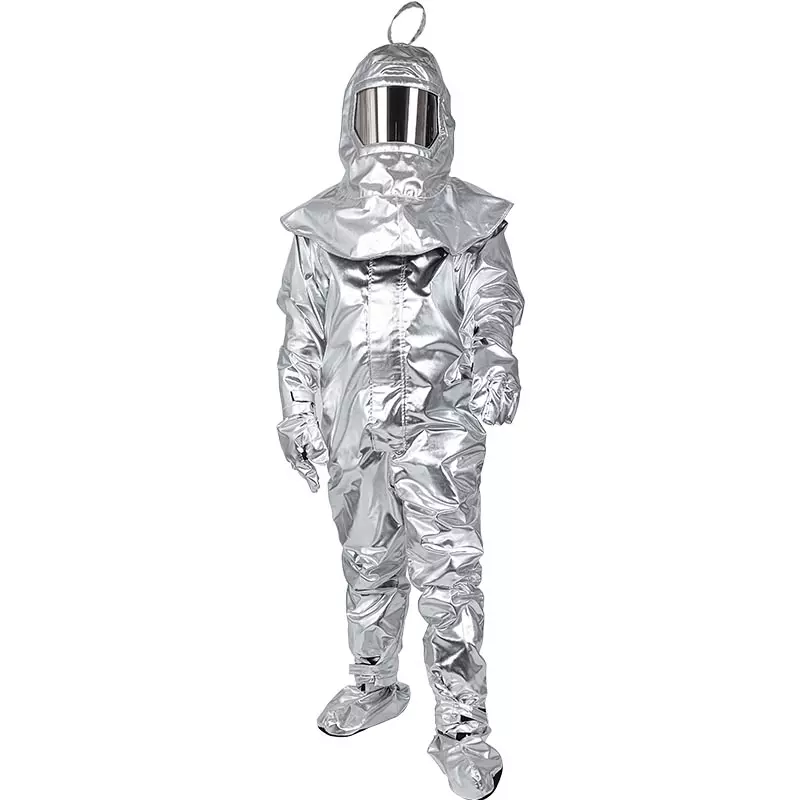
These fabrics are used in arc flash suits and arc-rated clothing, designed to protect workers from arc flash incidents rather than continuous flame exposure alone.
Arc flash fabrics incorporate all FR properties but extend protection through additional engineering:
Arc-rated fabrics absorb and disperse intense thermal energy generated during an arc flash event, preventing heat concentration on the skin.
Like FR fabrics, they do not melt, but they are specifically tested under arc exposure to ensure no secondary injury occurs.
Arc flash fabrics are certified based on measurable performance values:
ATPV (Arc Thermal Performance Value)
EBT (Energy Breakopen Threshold)
These indicate how much incident energy (cal/cm²) the fabric can withstand before causing a second-degree burn.
Arc flash events generate explosive forces and molten metal droplets. Arc-rated fabrics are designed to:
Resist tearing under pressure
Prevent molten metal adherence
Maintain structural integrity during the blast
Arc flash fabrics are used in electrical and energy-intensive environments, such as:
Power generation and distribution systems
Substations and switchgear operations
Renewable energy (solar, wind, energy storage systems)
Electrical maintenance and live-line work
In these scenarios, wearing an arc flash suit is often mandatory.
| Feature | Flame-Resistant Fabrics | Arc Flash Fabrics |
|---|---|---|
| Primary Hazard | Open flame and heat | Electrical arc flash (heat + pressure + molten metal) |
| Core Function | Prevent burning and flame spread | Protect against high-energy arc flash events |
| Testing Standard | Vertical flame tests | Arc rating (ATPV / EBT) testing |
| Heat Exposure Type | Sustained flame | Instant high-energy thermal burst |
| Molten Metal Protection | Limited | Designed to resist and shed molten metal |
| Structural Integrity Under Blast | Not designed for blast | Engineered for pressure resistance |
| Typical PPE | FR garments | Arc flash suit / arc-rated clothing |
FR fabrics are appropriate when the primary risk involves:
Continuous or accidental flame exposure
Thermal radiation without explosive energy
Industrial heat processes
In such environments, FR garments provide adequate protection without unnecessary bulk.
Arc flash fabrics must be used when:
There is risk of electrical faults or short circuits
Equipment operates under high voltage
Arc flash incidents are part of hazard assessment
In these cases, only arc-rated PPE, such as an arc flash suit, can provide sufficient protection.
Using standard FR clothing in an arc flash environment is inadequate and potentially dangerous.
Choosing between FR and arc flash fabrics should follow a structured approach:
Determine whether the risk involves fire, electrical arc, or both.
For electrical environments, calculate incident energy levels and select garments with appropriate arc ratings.
Ensure the fabric meets relevant standards such as:
NFPA 70E
ASTM F1506
IEC 61482
Higher protection often means heavier garments. Selection must balance safety with wearability to ensure compliance in real working conditions.
Although flame-resistant fabrics and arc flash fabrics share similar material foundations, they serve distinct protective purposes.
FR fabrics provide essential protection against fire and heat.
Arc flash fabrics extend that protection to high-energy electrical hazards, including thermal, mechanical, and molten metal risks.
In modern industrial safety systems, understanding this distinction is critical.
Because in high-risk environments,
wearing the wrong protection is effectively the same as having no protection at all.
Tags:
Shanghai C&G's personal protective clothing and PPE products are trusted by customers in the world. Our products are exported worldwide, with a strong presence in the United States, China, Japan, Germany, the United Kingdom, India, France, Italy, Brazil, and Canada. In addition, we have a significant customer base in other countries across each continent, including Australia, New Zealand, South Africa, Nigeria, and Egypt in Africa; Argentina, Chile, and Mexico in South America; Russia, South Korea, and Indonesia in Asia; Spain, Poland, and Turkey in Europe; and Saudi Arabia and the United Arab Emirates in the Middle East. Wherever you are in the world, we have the products you need to stay safe and protected. Contact us today to learn more about our products and how we can help you meet your safety needs.









Shanghai C&G is committed to building a leading brand in the safety emergency industry with technological innovation as the core and sustainable development, providing customers with one-stop safety emergency solutions, escorting the safety of customers, and make the world safer!
Building 39, Lane 123, Shenmei Road, Pudong New District, Shanghai, China
inquiry@cgprotection.com
+86-21-38214394


© 2023 Shanghai C&G. All Rights Reserved.