Shanghai, China
+86-17317656853
inquiry@cgprotection.com

An insulated screwdriver is one of the few tools where the wrong decision is invisible. The handle looks fine, the shank looks fine, and the insulation that makes the tool safe is a thin layer that a knife nick, a hot joint or a solvent wipe can defeat without leaving an obvious mark. When the tool is then used on a live terminal because "it is an insulated one", the protection is gone and nobody has checked.
Insulated hand tools are engineering products with a defined standard, a defined voltage limit and a defined inspection regime. This guide covers what IEC 60900 actually requires, how the two-layer construction is meant to work, the inspection that has to happen before every use, and the working rules that keep insulated tools from becoming the weakest link in a live-work task.
IEC 60900 is the standard for hand tools for live working up to 1,000 V AC and 1,500 V DC. Tools made to it are dielectric-tested as complete tools — insulation and handle together — typically at 10,000 V, and marked with the double-triangle 1000 V symbol, the standard number, the manufacturer and the year of manufacture.
What the standard does not do is make a tool safe at any voltage you choose to apply it to. Three limits matter in practice:
1,000 V AC / 1,500 V DC is the ceiling. Above that, different equipment and different procedures apply.
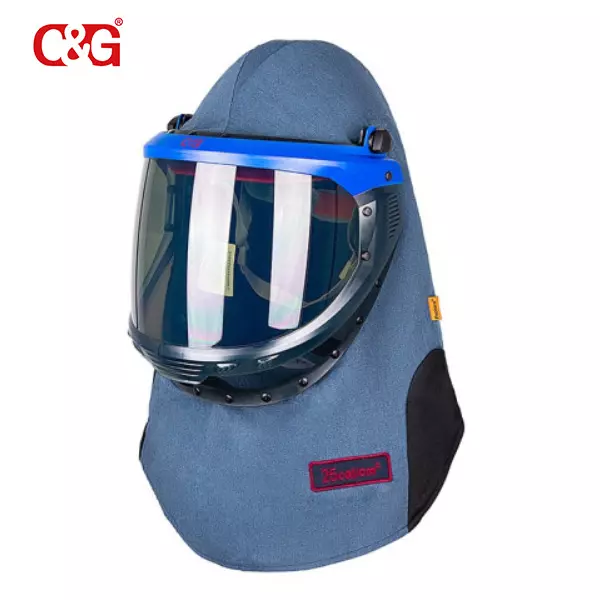
Insulated tools are not arc flash PPE. They reduce the chance of a shock path through the tool; they do not carry a cal/cm² rating and do not replace gloves, arc-rated clothing or a face shield.
The insulation is only as good as its condition. A tool that has been dropped, heated, cut or cleaned with solvent may no longer meet the standard it was made to, whatever the marking says.
Most quality insulated tools use a two-colour construction: an inner insulating layer in one colour, moulded over the working part, and an outer layer in a contrasting colour. The purpose is diagnostic. If the outer layer is cut or worn through, the inner colour appears — a visible warning that the dielectric barrier is compromised before the tool reaches a live terminal.
This is why the colour scheme is not decoration. A tool where the outer layer has been repaired with tape, painted over, or replaced with heat-shrink no longer communicates its condition, and should be treated as uninsulated. The same applies to tools whose insulation has been sanded, trimmed or drilled to fit a tight space.
| Tool family | Typical live-work use | Notes |
|---|---|---|
| Screwdrivers and nut drivers | Terminal work in panelboards, control circuits | Blade must fully engage the screw |
| Pliers, side cutters, cable strippers | Small cable and wire work near live parts | Cutting edge must be sharp; a slipping cutter is a hazard |
| Socket and wrench sets | Busbar and lug torque work | Torque values still apply; insulation does not add strength |
| Knives and cable sheaths | Sheath removal on dead-but-adjacent cables | Never cut toward the body; sheathed blades only |
| Voltage detectors and testers | Proving dead | A different standard applies — use a dedicated tester |
Impact tools, hammers, chisels and anything struck are outside the scope: impact damages insulation and the standard does not cover them. Tools used for pulling, prying or levering are likewise a poor fit, because the insulation is designed for electrical duty, not mechanical overload.
The inspection takes less than a minute and is the control that actually prevents incidents:
Look at the whole insulated surface, not just the handle. Cuts, gouges, cracks, punctures, burns and abrasion are withdrawal criteria.
Check the inner layer is not visible anywhere along the shank or handle.
Check for embedded metal — swarf, wire strands, staple legs — especially after work in enclosures with drilling or cutting nearby.
Check flexibility and surface: hardened, sticky or glossy insulation indicates heat or chemical damage.
Check the working end: a worn Phillips tip or a dull cutter slips and turns a controlled task into an uncontrolled one.
Check the marking is legible: 1000 V symbol, standard, manufacturer, year of manufacture.
Any tool that fails one of these checks goes out of service immediately, and out of the toolbox — not into the "maybe" compartment where it will be picked up on a bad day.
Tool rolls and cases, not loose in a bag with spanners and hacksaws. Most insulation damage happens in transit, not in use.
Away from heat: vehicle dashboards, plant rooms next to steam lines and direct sun harden the compound.
Away from solvents and oils, which soften and swell the insulation and can migrate under the outer layer.
Separate from bare tools, so a sharp edge cannot score an insulated shank.
IEC 60900 defines type and routine tests at manufacture. In service, the regime is set by the employer's live-work procedure and by the manufacturer's recommendation; a common approach is periodic dielectric retesting at fixed intervals plus immediate retest after any event that could have damaged the insulation — a drop onto concrete, contact with a hot joint, exposure to solvent, or a tool that has been stored loose.
What the record needs to show is simple and auditable: a tool register with the unique tool number, the standard and voltage class, the date of purchase, the last test date and the next due date. The register is what lets a supervisor answer "is this toolbox fit for live work" without opening every tool roll.
Insulated tools supplement, they do not replace, isolation. The preferred method remains de-energise, lock, tag, prove dead.
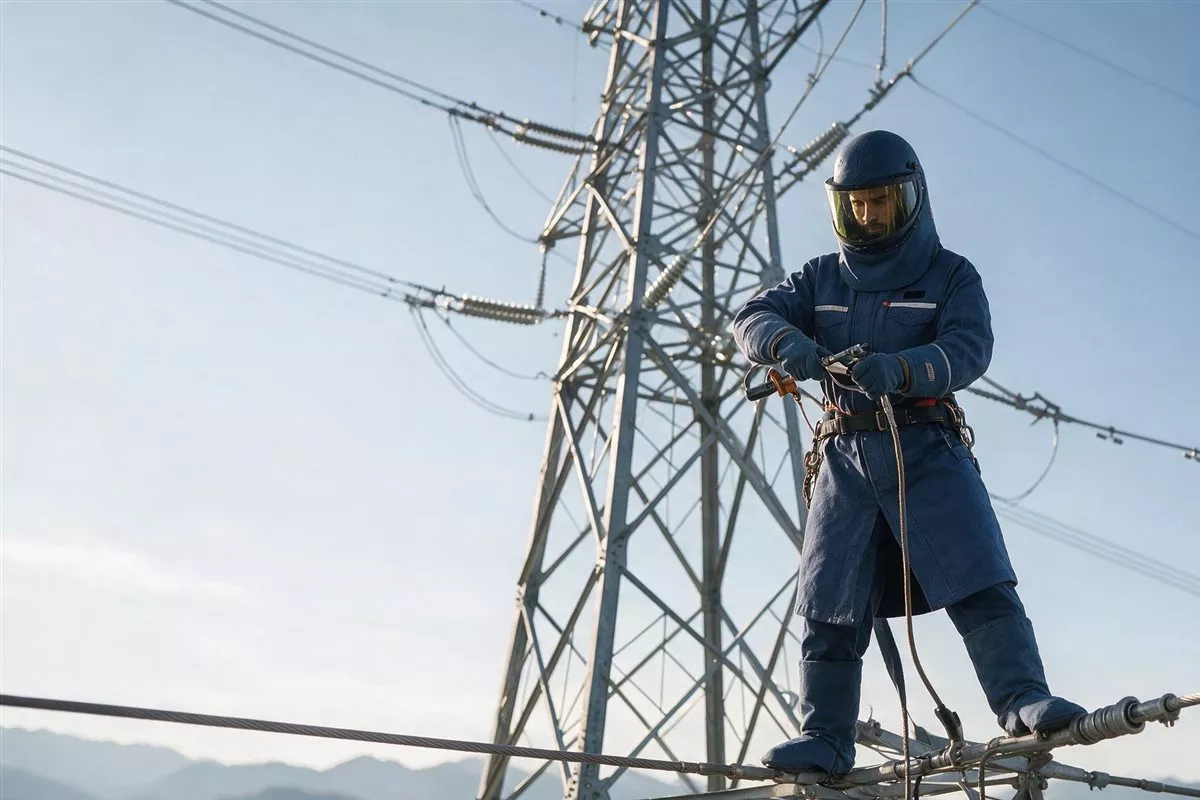
Layer the protection: insulating gloves with leather protectors for the hand, insulated tools for the contact, arc-rated clothing and face protection to the incident energy at that point. Our guide to insulating glove classes covers the glove side of that stack.
One hand rule where practical, and no loose metal on the body — watch, ring, chain, tape measure.
Work from a defined position — on an insulating mat where the floor is part of the risk, with the body outside the direct line of the terminal. Our article on metering at service entrances shows how the working distance changes the exposure.
Match the tool to the task. A socket that does not fit fully, or a blade that cams out of the screw head, is a slip waiting to bridge two terminals.
Stop and reassess when the enclosure turns out to be tighter, hotter or more energised than the drawing showed.
When specifying insulated tools for a team, ask for:
The standard and voltage marking on the tool itself: IEC 60900, double triangle, 1000 V.
Two-colour insulation with a documented inner layer.
Test certificates for the batch, and a stated retest recommendation.
Tool numbers or a marking method compatible with your register.
A replacement path — insulated tools are consumables with a service life, not heirlooms.
For live-line work beyond 1,000 V, the equipment changes class entirely: insulating rods and their characteristics cover the tools used at medium voltage, where distance and not insulation thickness is the primary control.
No. Insulated tools are rated for contact voltage — 1,000 V AC / 1,500 V DC under IEC 60900 — and carry no arc rating. Arc-rated clothing, gloves and face protection are selected from the incident energy study and are separate products.
Inspect the whole insulated surface before every use: no cuts, cracks, embedded metal, burns or visible inner layer. Follow the register for the next dielectric retest. Any doubt means withdrawal from service.
No. Repairs destroy the two-layer diagnostic design and the tool is no longer to standard. Replace it.
Follow the manufacturer's recommendation and the live-work procedure — commonly periodic dielectric retesting plus retest after any drop, heat exposure or solvent contact. Record every test against the tool number.
Only within a documented live-work procedure, with the correct gloves, arc-rated clothing and face protection for the incident energy at that point, and by a person trained and authorised for live work. The tool removes one path to shock; it does not remove the arc flash hazard.
If you are standardising insulated tools across a maintenance team, send your tool list and working voltages to the C&G team. We can match tool families, voltage classes and marking to your register, and supply the gloves, mats and arc-rated clothing that complete the set. The full arc flash and insulating PPE range covers the layers that go with the toolbox.
Tags: insulated tools, IEC 60900, live working

Shanghai C&G's personal protective clothing and PPE products are trusted by customers in the world. Our products are exported worldwide, with a strong presence in the United States, China, Japan, Germany, the United Kingdom, India, France, Italy, Brazil, and Canada. In addition, we have a significant customer base in other countries across each continent, including Australia, New Zealand, South Africa, Nigeria, and Egypt in Africa; Argentina, Chile, and Mexico in South America; Russia, South Korea, and Indonesia in Asia; Spain, Poland, and Turkey in Europe; and Saudi Arabia and the United Arab Emirates in the Middle East. Wherever you are in the world, we have the products you need to stay safe and protected. Contact us today to learn more about our products and how we can help you meet your safety needs.











Shanghai C&G is committed to building a leading brand in the safety emergency industry with technological innovation as the core and sustainable development, providing customers with one-stop safety emergency solutions, escorting the safety of customers, and make the world safer!
Building 39, Lane 123, Shenmei Road, Pudong New District, Shanghai, China
inquiry@cgprotection.com
+86-21-38214394


© 2023 Shanghai C&G. All Rights Reserved.