Key Differences and Application Boundaries Explained
In high-risk industries such as power utilities, energy, and industrial manufacturing, flame resistant clothing and arc flash clothing are often mistakenly treated as interchangeable.
In reality, they differ fundamentally in protection mechanisms, risk coverage, technical standards, and performance limits.
Choosing the wrong protective clothing not only reduces protection effectiveness, but in some cases can significantly increase injury severity during an accident.
Understanding the distinction between flame resistant clothing and arc flash clothing is the foundation of an effective personal protective equipment (PPE) strategy.
1. Flame Resistant Clothing: Fire Protection Does Not Equal Arc Protection
1.1 Core Protection Logic of Flame Resistant Clothing
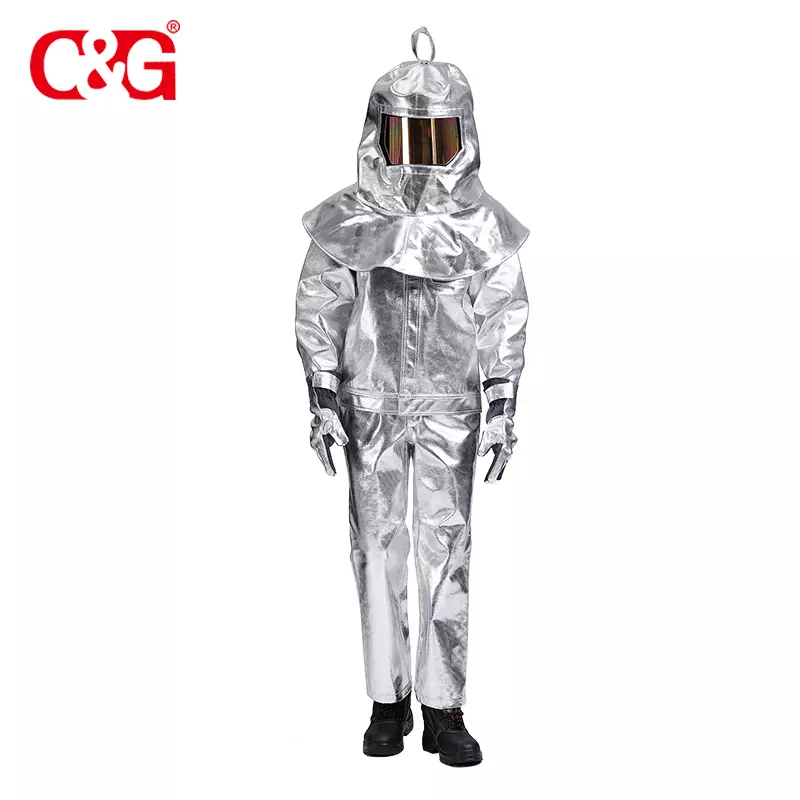
Flame resistant clothing is designed to prevent garments from igniting, continuing to burn, or melting when exposed to open flames or thermal sources.
Key characteristics include:
-
Self-extinguishing after flame exposure
-
No melting or dripping
-
Reduced secondary burn risk
-
Basic thermal resistance
Typical applications of flame resistant clothing include:
-
Firefighting and rescue support
-
Welding and hot-work operations
-
Oil, gas, and petrochemical environments
-
General industrial thermal-risk workplaces
1.2 Protection Limitations of Flame Resistant Clothing
Flame resistant clothing is not designed for arc flash hazards, and its limitations are often overlooked:
-
❌ No protection against ultra-high, short-duration energy release
-
❌ No quantified arc energy rating
-
❌ No assessment of second-degree burn threshold
-
❌ Fabric structure not optimized for blast pressure or molten metal projection
In other words:
Flame resistant clothing may not ignite, but that does not mean the wearer will not be severely burned.
2. Arc Flash Clothing: Engineered for High-Energy Electrical Events
2.1 Why Arc Flash Clothing Exists
An arc flash is not a conventional fire—it is a complex energy event involving:
-
Temperatures reaching 10,000–20,000°C
-
Intense thermal radiation
-
Explosive pressure waves
-
High-velocity molten metal fragments
Arc flash clothing is designed to achieve one core objective:
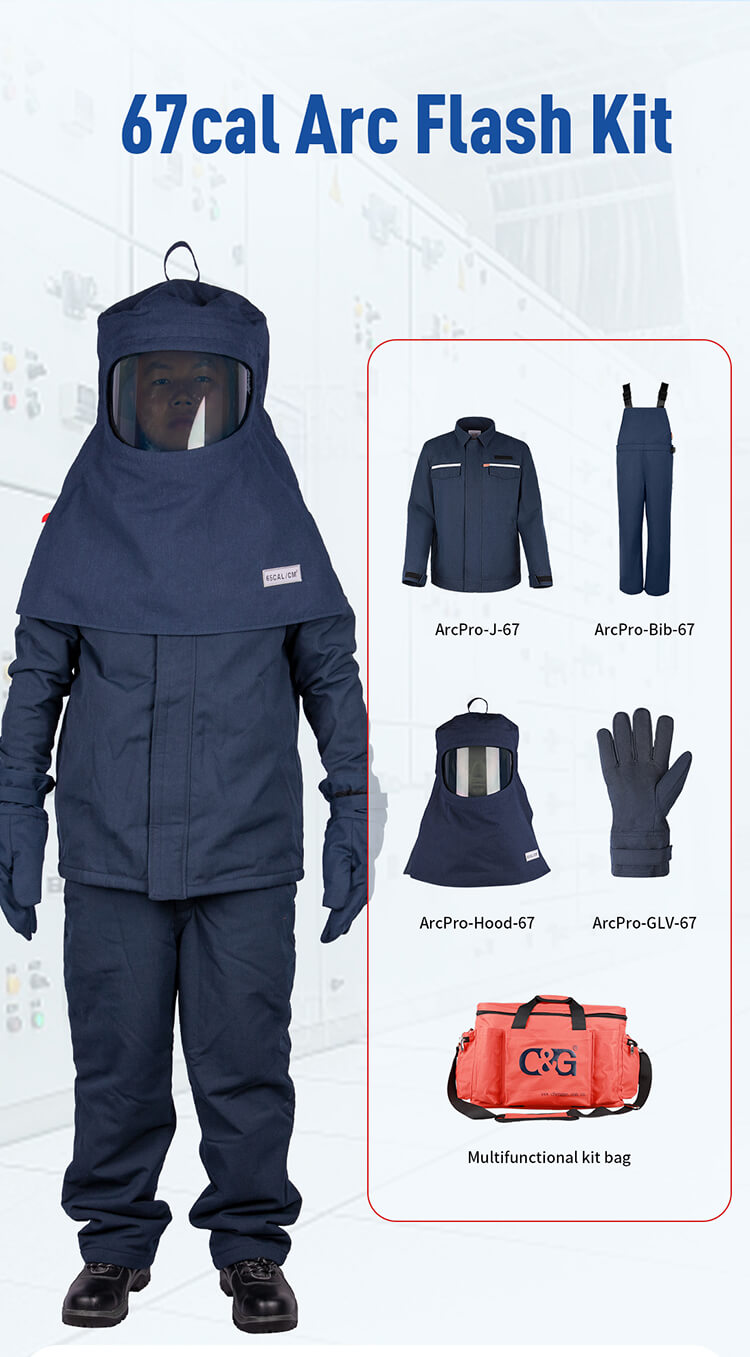
To delay heat transfer, limit burn severity, and increase survivability during an electrical arc incident.
2.2 Critical Capabilities of Arc Flash Clothing
Compared with standard flame resistant clothing, arc flash clothing must provide:
-
Quantified Arc Protection Performance
-
Defined ATPV or EBT ratings
-
Clear correlation between garment rating and incident energy levels
-
-
Multi-Layer Thermal Attenuation
-
Air-gap insulation structures
-
Significant delay in skin temperature rise
-
-
Blast and Molten Metal Resistance
-
Protection against molten copper and metal droplets
-
Reduced mechanical injury from arc blast
-
-
System Compatibility
-
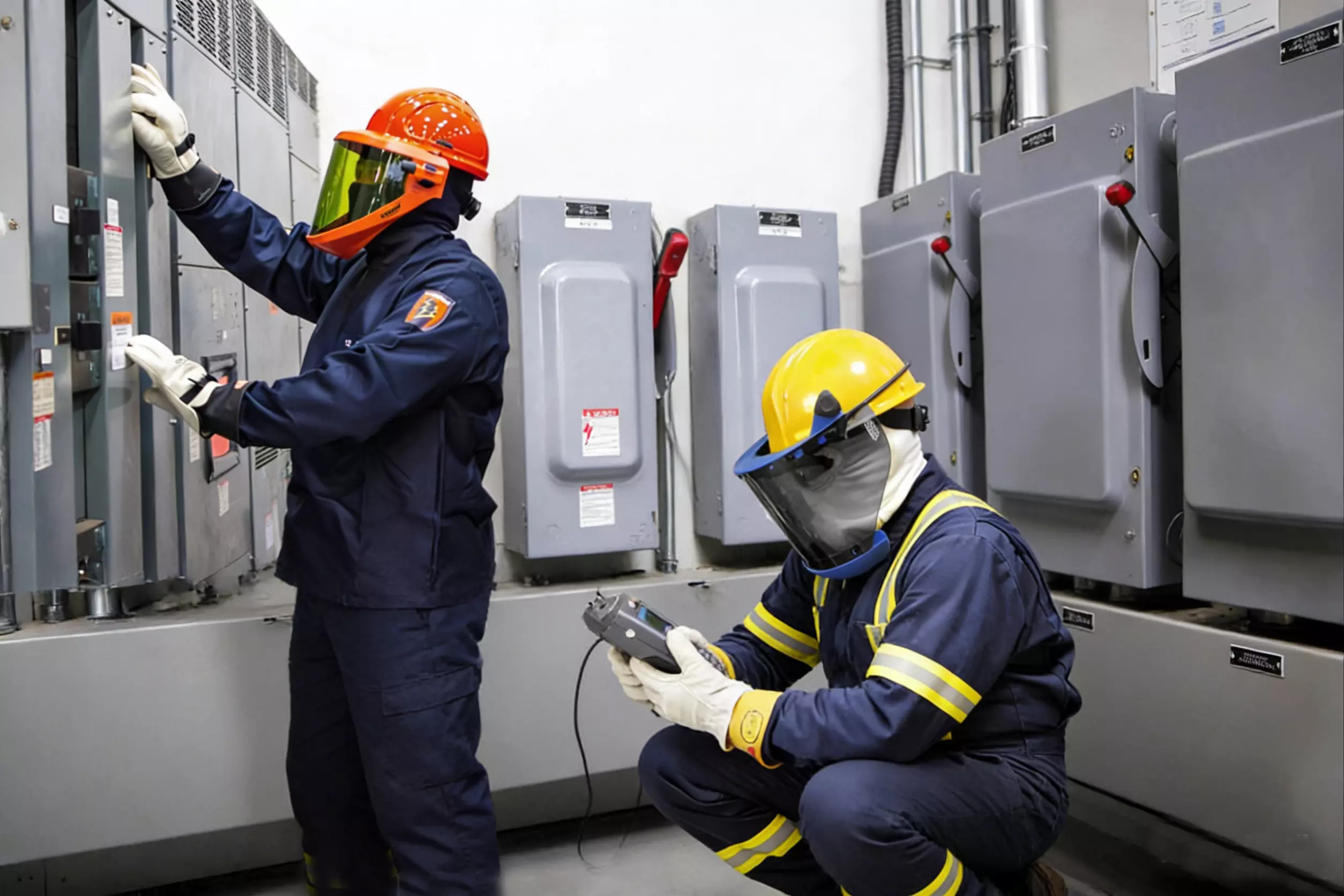
Integration with arc flash hoods, face shields, gloves, and balaclavas
-
3. Key Differences at a Glance: Flame Resistant Clothing vs. Arc Flash Clothing
| Comparison Aspect | Flame Resistant Clothing | Arc Flash Clothing |
|---|---|---|
| Primary Hazard | Open flame, heat | Arc flash, high-energy electrical fault |
| Energy Rating | None | ATPV / EBT clearly defined |
| Thermal Radiation Control | Limited | Enhanced and quantified |
| Blast Pressure Consideration | Not designed | Structural mitigation |
| Molten Metal Protection | Basic | Reinforced |
| Protection Objective | Prevent ignition | Control burn injury severity |
| Typical Use | Hot work | Energized electrical work |
4. Application Boundaries: When Arc Flash Clothing Is Mandatory
In the following scenarios, flame resistant clothing alone is insufficient and unsafe:
-
Live maintenance in substations
-
Switchgear and electrical panel operation
-
Energy storage system (ESS) battery enclosures
-
Wind and solar inverter maintenance
-
Emergency electrical fault response
-
Any task with potential arc flash exposure
In these environments, arc flash clothing certified to relevant standards is essential, not optional.
5. Material Selection Is About Risk Assessment — Not Visual Safety
The critical question is not whether clothing is flame resistant, but:
Does the task involve potential arc flash energy release?
If the answer is yes:
-
Flame resistant ≠ compliant
-
No ATPV rating ≠ inadequate protection
-
Experience-based judgment ≠ safety assurance
6. Conclusion: The Right Fabric Protects the Final Line of Defense
Flame resistant clothing addresses fire hazards.
Arc flash clothing protects against electrical energy hazards.
In high-risk electrical operations,
survivability is determined not by whether the garment burns, but by how effectively it blocks heat transfer to the skin.
Choosing the correct arc flash clothing is not about exceeding standards—
it is about ensuring that, when an unpredictable incident occurs,
the outcome remains within controllable limits.
Selecting the right protection is not a cost decision.
It is a life-critical one.