Shanghai, China
+86-17317656853
inquiry@cgprotection.com

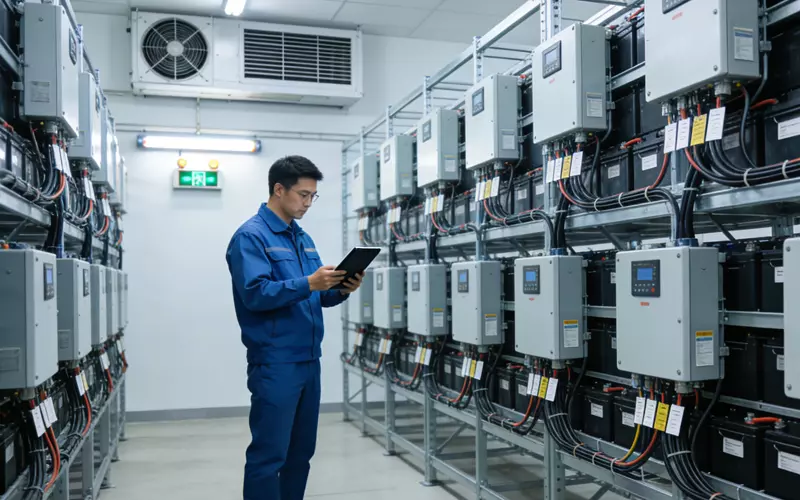
Arc flash incidents are commonly associated with high-voltage substations, transmission systems, and switchgear faults. In contrast, data centers and UPS environments are often perceived as low risk—because the voltage levels seem moderate, the environment looks clean, and the systems appear stable.
The reality is different:
Data centers represent a high-risk arc flash environment characterized by high fault current density, continuous operation, and complex power distribution—where the danger is simply less visible.
Typical system voltages in data centers include:
380 / 400 / 415 V low-voltage distribution
UPS output circuits
Power Distribution Units (PDUs)
DC battery systems
Personnel often assume:
“This isn’t high voltage, so the hazard is limited.”
However, arc flash severity is not determined primarily by voltage, but by:
| Critical Factor | Explanation |
|---|---|
| Available fault current | Extremely high in data center systems |
| Arc duration | Improper protection settings can extend clearing time |
| Working distance | Close proximity increases incident energy |
| Equipment density | Restricted cooling accelerates fault escalation |
Low voltage does NOT mean low arc energy.
In high short-circuit capacity systems, incident energy can still reach CAT 2–CAT 4 PPE levels.
UPS infrastructure contains several arc-prone characteristics.
Series-connected batteries create high DC voltage
Very low internal resistance
Massive instantaneous short-circuit current
DC arcs lack a natural current zero crossing, making them harder to extinguish
DC arc events often last longer and produce more severe thermal damage.
Maintenance may involve:
Static bypass
Maintenance bypass
Dual power source transfer
Faults during switching—such as poor contact, mis-operation, or phase faults—can trigger arc flash events instantly.
Data center electrical rooms feature:
Dense busbar systems
Compact switchgear
Limited heat dissipation
Tight cable routing
These conditions accelerate insulation degradation and reduce conductor spacing, increasing arc initiation probability.
| Category | Scenario |
|---|---|
| Loose connections | Vibration and thermal cycling loosen terminals |
| Insulation aging | Long-term temperature rise degrades materials |
| Energized insertion/removal | Improper hot-swap procedures |
| Tool drops | Metal tools bridging conductors in confined spaces |
| Foreign objects | Screws or wire strands left behind |
| Moisture/condensation | HVAC issues increasing humidity |
In substations, these are recognized as high-risk electrical issues. In data centers, they are often treated as routine maintenance problems.
Personnel often work:
In front of PDUs
Inside UPS cabinets
Along battery racks
Working distances may be < 45 cm, dramatically increasing incident energy exposure.
Narrow aisles and front-facing work posture expose the face, neck, and upper torso to direct arc energy.
Confined corridors amplify the pressure wave and thermal radiation, creating a “wrap-around” blast effect.
| Perception | Reality |
|---|---|
| Looks like an IT facility | Actually a high-energy power environment |
| Equipment is “precision” | Electrical hazards remain severe |
| Quiet, no sparks | Faults develop extremely fast |
| Frequent maintenance | Exposure frequency is higher than substations |
The risk is not absent—it is simply less obvious but more frequent.
A common misconception:
“Arc flash PPE isn’t needed in server rooms.”
Yet any of the following can place workers within the arc flash boundary:
Opening energized panels
Live testing
Busbar system maintenance
Battery bank servicing
Bypass switching operations
Recommended PPE may include (based on arc flash study results):
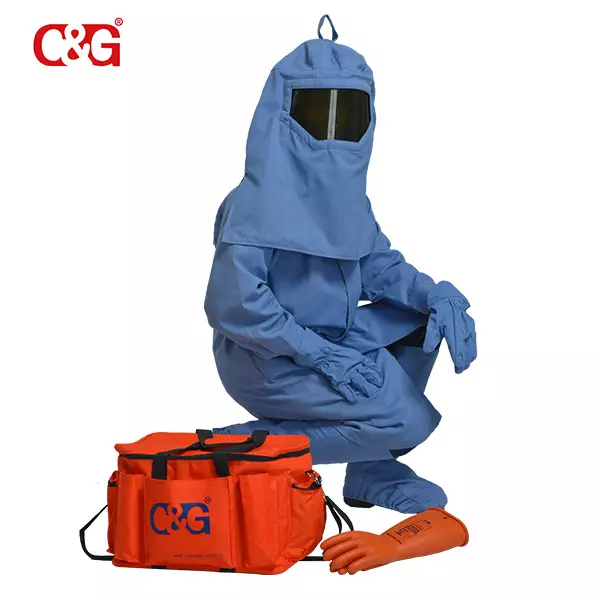
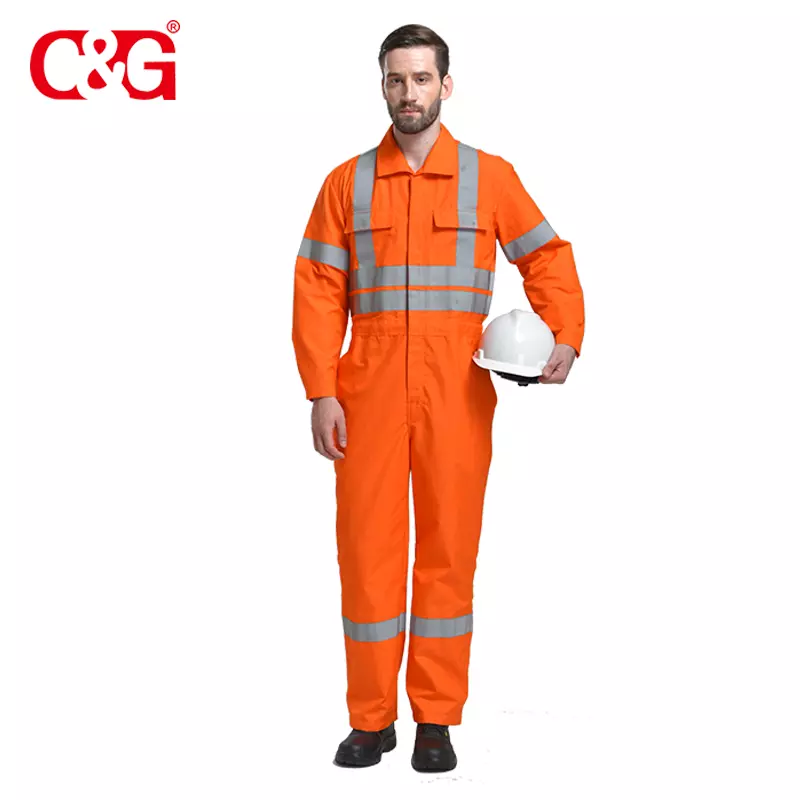
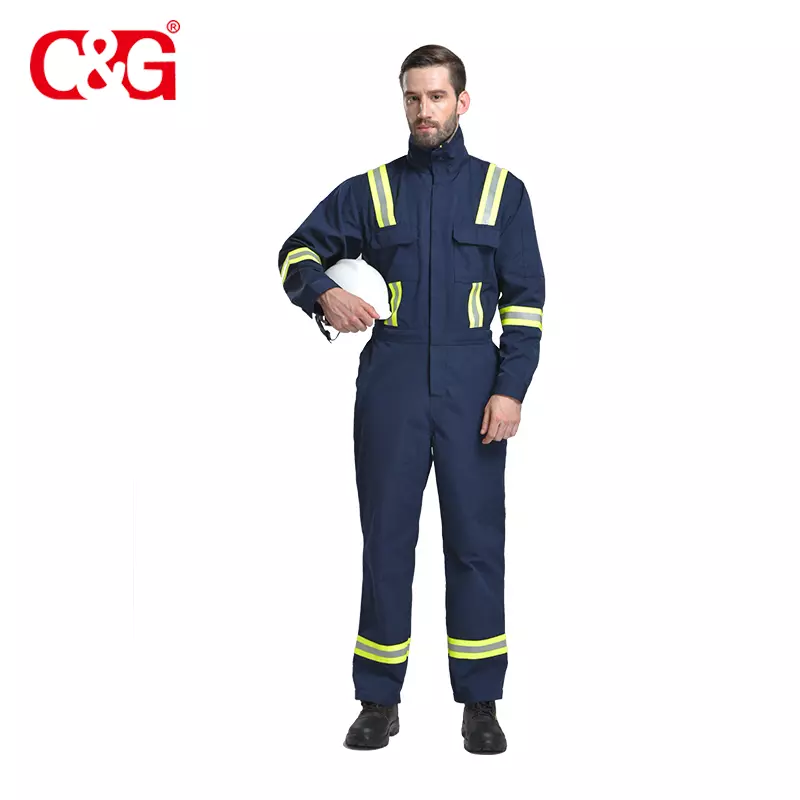
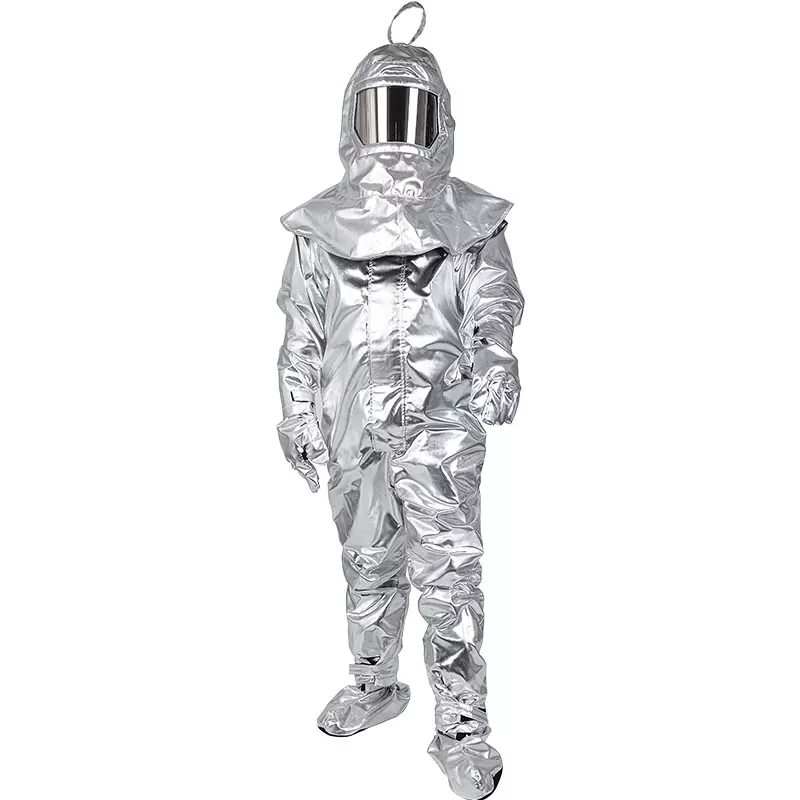
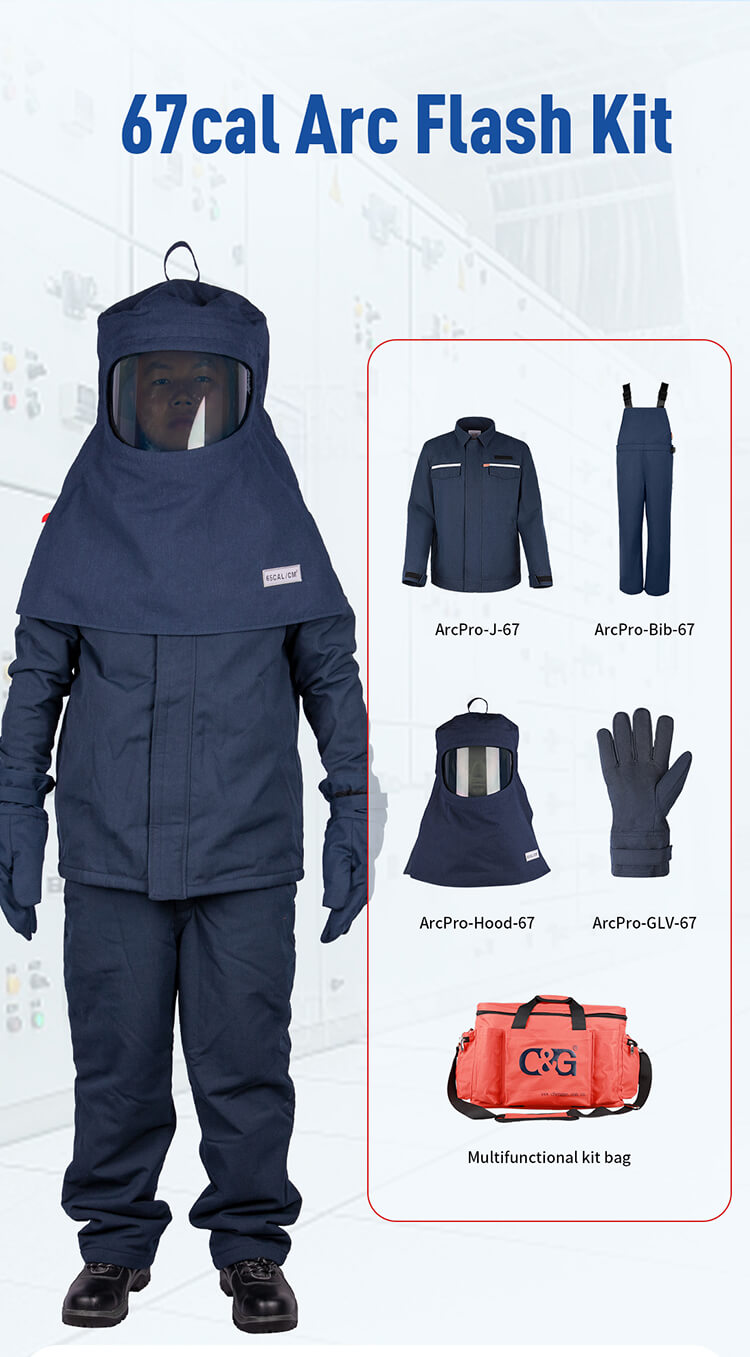
Arc flash protective clothing (CAT 2 or higher)
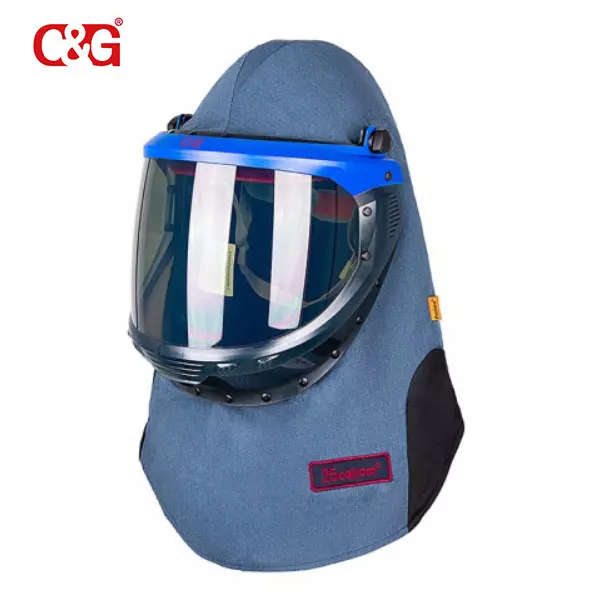
Arc-rated face shield
Insulating gloves
Arc flash hood
A data center is not a low-risk electrical environment. It is a system defined by:
Continuous operation, high power density, high short-circuit capacity, and frequent human exposure.
Arc flash hazards have not disappeared—they have only changed appearance.
When treated merely as an IT maintenance space, we forget its true nature:
A critical electrical node capable of releasing massive energy instantly.
The danger is overlooked not because it is absent,
but because it doesn’t look dangerous.
Arc flash, however, has no concern for appearances.
Tags:

Shanghai C&G's personal protective clothing and PPE products are trusted by customers in the world. Our products are exported worldwide, with a strong presence in the United States, China, Japan, Germany, the United Kingdom, India, France, Italy, Brazil, and Canada. In addition, we have a significant customer base in other countries across each continent, including Australia, New Zealand, South Africa, Nigeria, and Egypt in Africa; Argentina, Chile, and Mexico in South America; Russia, South Korea, and Indonesia in Asia; Spain, Poland, and Turkey in Europe; and Saudi Arabia and the United Arab Emirates in the Middle East. Wherever you are in the world, we have the products you need to stay safe and protected. Contact us today to learn more about our products and how we can help you meet your safety needs.











Shanghai C&G is committed to building a leading brand in the safety emergency industry with technological innovation as the core and sustainable development, providing customers with one-stop safety emergency solutions, escorting the safety of customers, and make the world safer!
Building 39, Lane 123, Shenmei Road, Pudong New District, Shanghai, China
inquiry@cgprotection.com
+86-21-38214394


© 2023 Shanghai C&G. All Rights Reserved.