Shanghai, China
+86-17317656853
inquiry@cgprotection.com

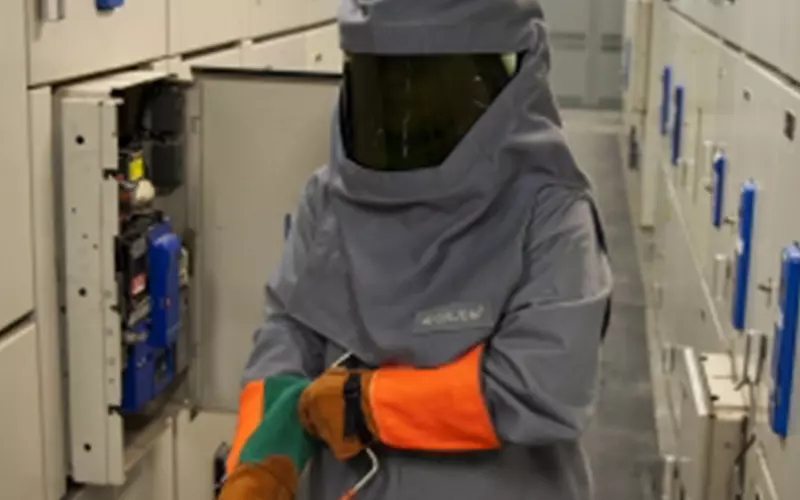
In power transmission and distribution systems, arc flash incidents represent one of the most severe and unpredictable electrical hazards. For grid operation and maintenance personnel working in substations, switchgear rooms, and live-line environments, effective arc flash protection is not optional—it is a fundamental requirement for occupational safety.
Understanding the specific protection needs of power grid maintenance tasks and selecting appropriate arc-rated PPE levels are critical to reducing injury risk and ensuring regulatory compliance.
Arc flash events release extreme thermal energy, intense pressure waves, molten metal, and high-intensity light within milliseconds. Typical power grid maintenance scenarios with elevated arc flash risk include:
Operation and maintenance of medium- and high-voltage switchgear
Live or near-live work on distribution panels and busbars
Fault isolation, breaker racking, and testing procedures
Emergency repairs under energized conditions
The incident energy generated during an arc flash can easily exceed human skin tolerance, making specialized arc flash protective clothing essential.
Power grid maintenance personnel require arc flash PPE that delivers protection across multiple dimensions:
Thermal protection against extreme radiant and convective heat
Resistance to molten metal splash and secondary ignition
Structural integrity under high pressure and blast forces
Flame resistance to prevent after-flame and fabric melting
Ergonomic comfort to support long-duration, high-intensity tasks
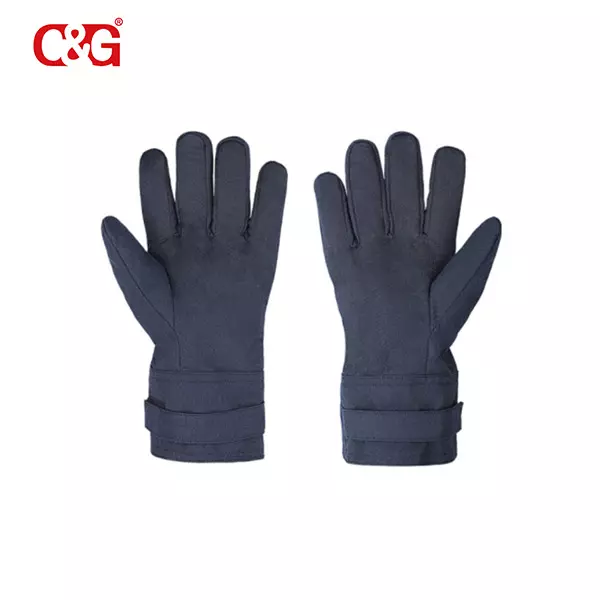
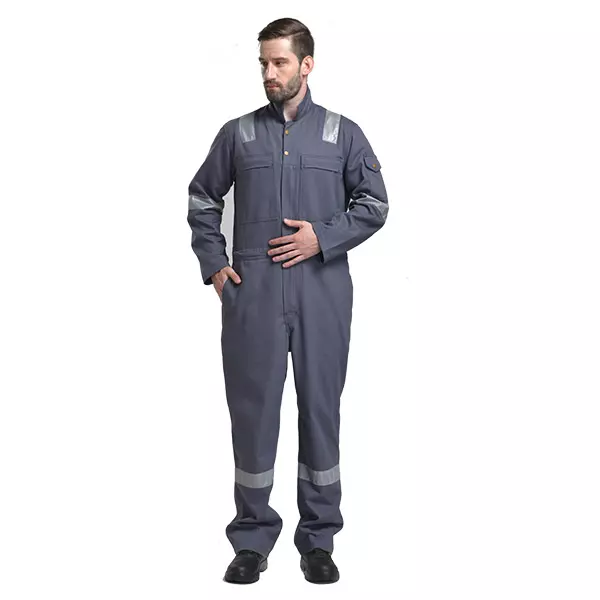
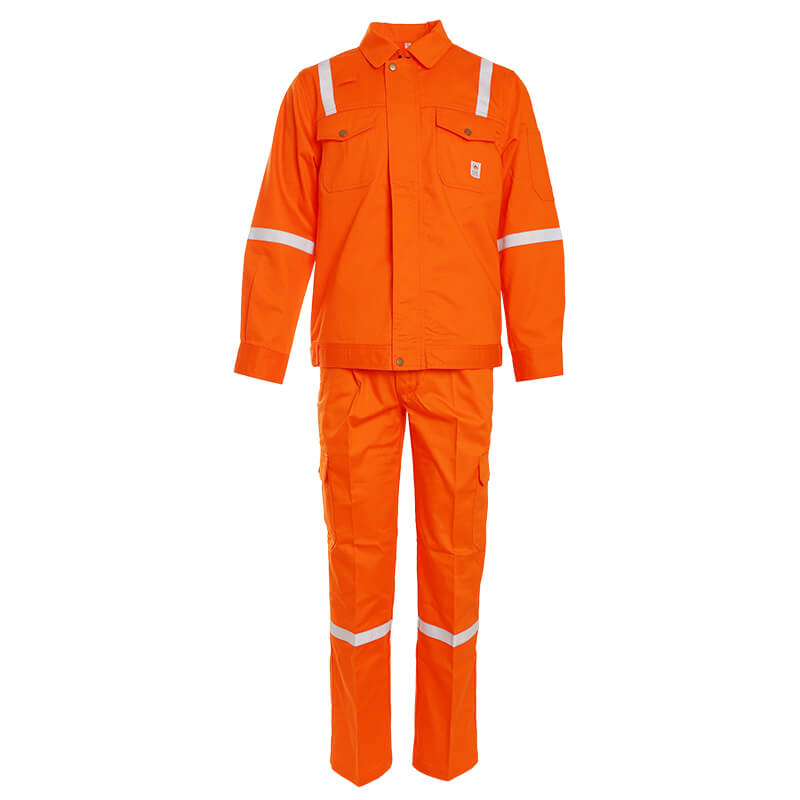
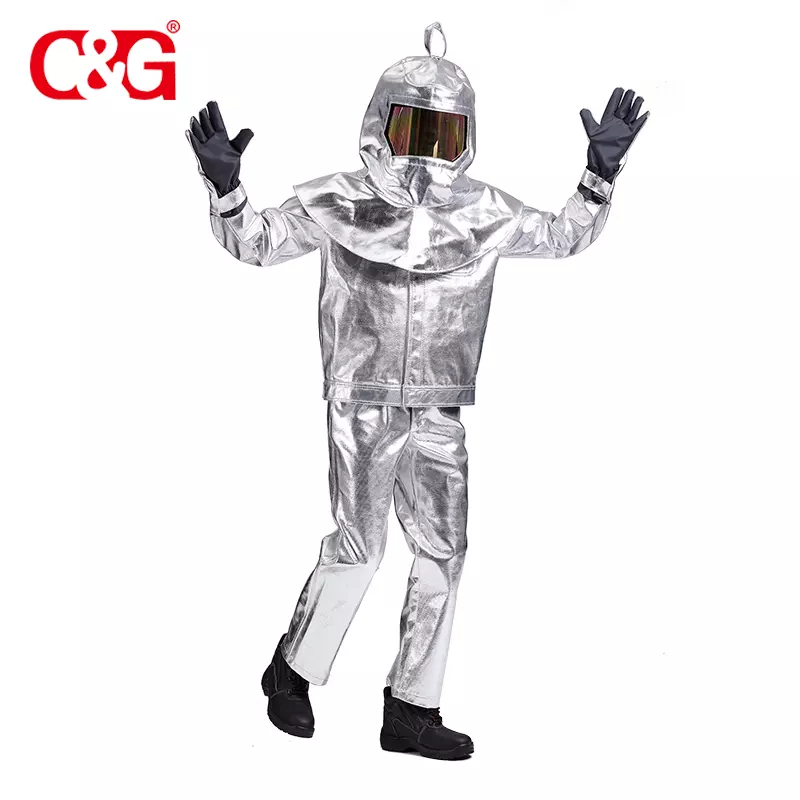
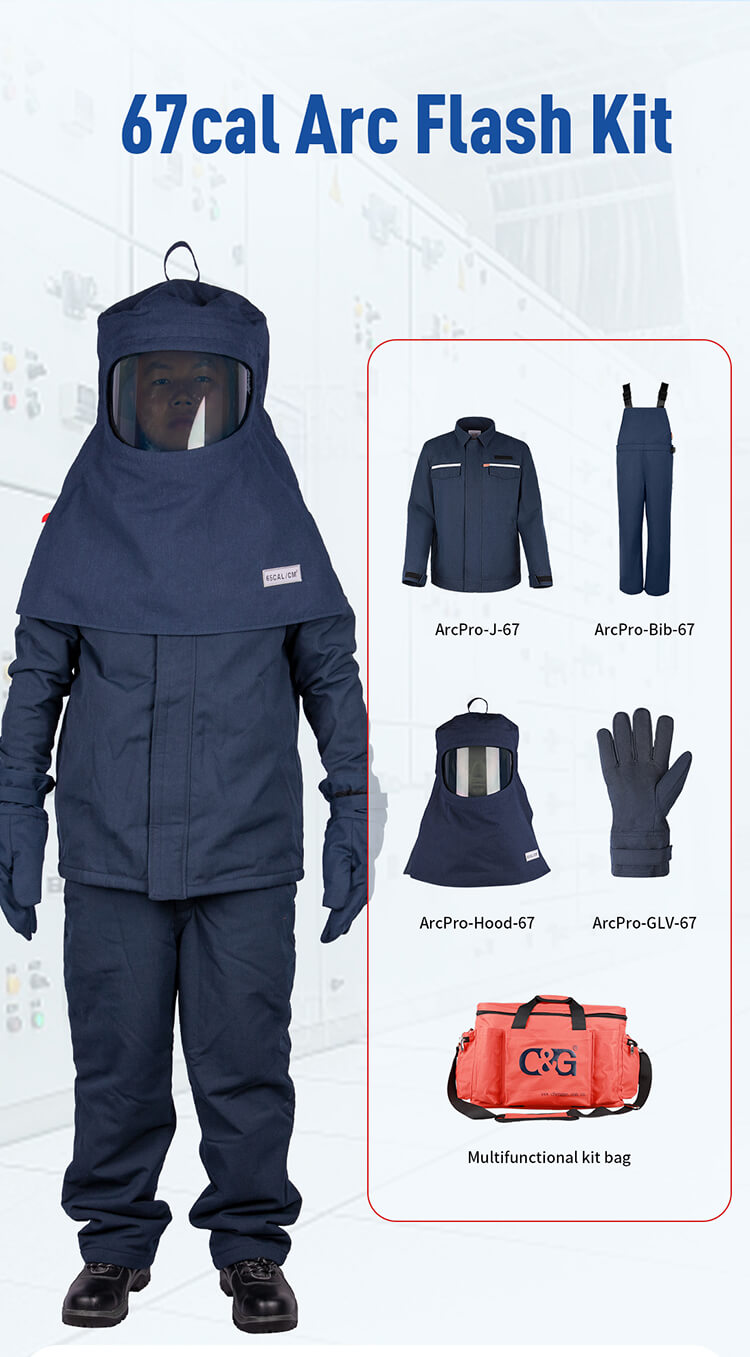
Arc flash suits, arc-rated coveralls, and arc flash hoods must function as a system rather than isolated components.
Arc flash protective clothing is typically classified by Arc Thermal Performance Value (ATPV) or Energy Breakopen Threshold (EBT), expressed in cal/cm². Common protection levels include:
8 cal/cm²: Low-risk distribution work and limited exposure tasks
12–20 cal/cm²: Medium-risk switchgear operation and routine maintenance
25–40 cal/cm²: High-risk environments such as substations, breaker racking, and fault-prone systems
Protection level selection should be based on formal arc flash risk assessments, system fault current calculations, and task-specific exposure analysis—rather than over-reliance on a single “maximum” rating.
Over-protection can be as problematic as under-protection. Excessively heavy or poorly ventilated arc flash suits may lead to:
Reduced mobility and dexterity
Increased heat stress and fatigue
Lower task efficiency and higher operational risk
Modern arc flash clothing for power grid maintenance emphasizes optimized fabric systems, layered constructions, and ergonomic tailoring to achieve a balance between arc protection, comfort, and productivity.
For power grid operation and maintenance personnel, arc flash protection is a mission-critical safety measure. Selecting the correct arc flash protection level—based on real working conditions and hazard assessments—ensures both effective risk mitigation and sustainable operational performance.
Well-designed arc flash suits and arc-rated PPE enable grid professionals to work safely, confidently, and efficiently in high-energy electrical environments where failure is not an option.
Tags:
Shanghai C&G's personal protective clothing and PPE products are trusted by customers in the world. Our products are exported worldwide, with a strong presence in the United States, China, Japan, Germany, the United Kingdom, India, France, Italy, Brazil, and Canada. In addition, we have a significant customer base in other countries across each continent, including Australia, New Zealand, South Africa, Nigeria, and Egypt in Africa; Argentina, Chile, and Mexico in South America; Russia, South Korea, and Indonesia in Asia; Spain, Poland, and Turkey in Europe; and Saudi Arabia and the United Arab Emirates in the Middle East. Wherever you are in the world, we have the products you need to stay safe and protected. Contact us today to learn more about our products and how we can help you meet your safety needs.







Shanghai C&G is committed to building a leading brand in the safety emergency industry with technological innovation as the core and sustainable development, providing customers with one-stop safety emergency solutions, escorting the safety of customers, and make the world safer!
Building 39, Lane 123, Shenmei Road, Pudong New District, Shanghai, China
inquiry@cgprotection.com
+86-21-38214394


© 2023 Shanghai C&G. All Rights Reserved.